One-Doctor Clinic Guide to Safe Botox
- 공유 링크 만들기
- X
- 이메일
- 기타 앱
Direct answer summary
ne contouring, and facial slimming.
This guide explains what Botox does, how to choose a clinic around Dokbawi Station, what to expect during a visit, and how a one-doctor, disease-and-aesthetics clinic can fit the needs of busy residents and commuters in Eunpyeong-gu.
What Botox does and who it is for
Botox is a neuromodulator, a purified protein that temporarily relaxes specific muscles. When injected in very small, controlled amounts, it reduces the movement of targeted muscles. This can soften expression lines and, in some areas, reduce muscle bulk.
Typical treatment areas include the frown lines between the eyebrows, horizontal forehead lines, crow’s feet around the eyes, bunny lines on the nose, dimpling of the chin, and vertical neck bands. Around the lower face, Botox is also commonly used in the jaw muscles, called the masseters, to help slim a square jawline or reduce clenching-related bulk. Some people also address a gummy smile or mild facial asymmetry with carefully placed injections.
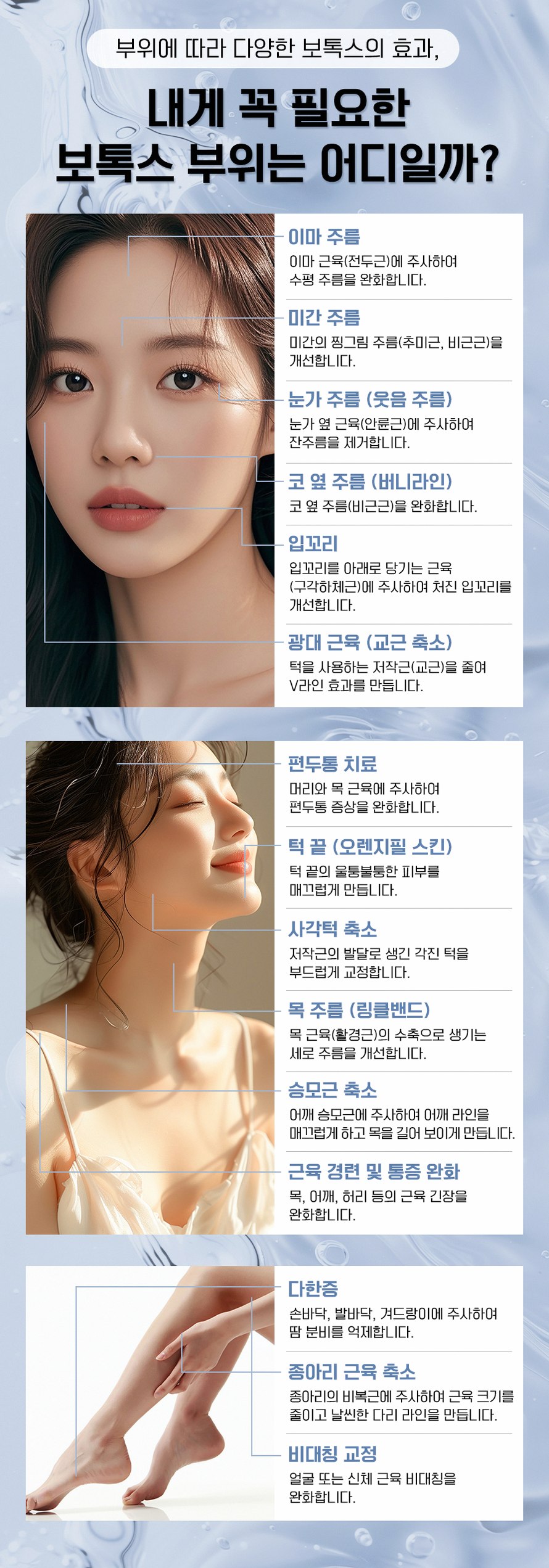
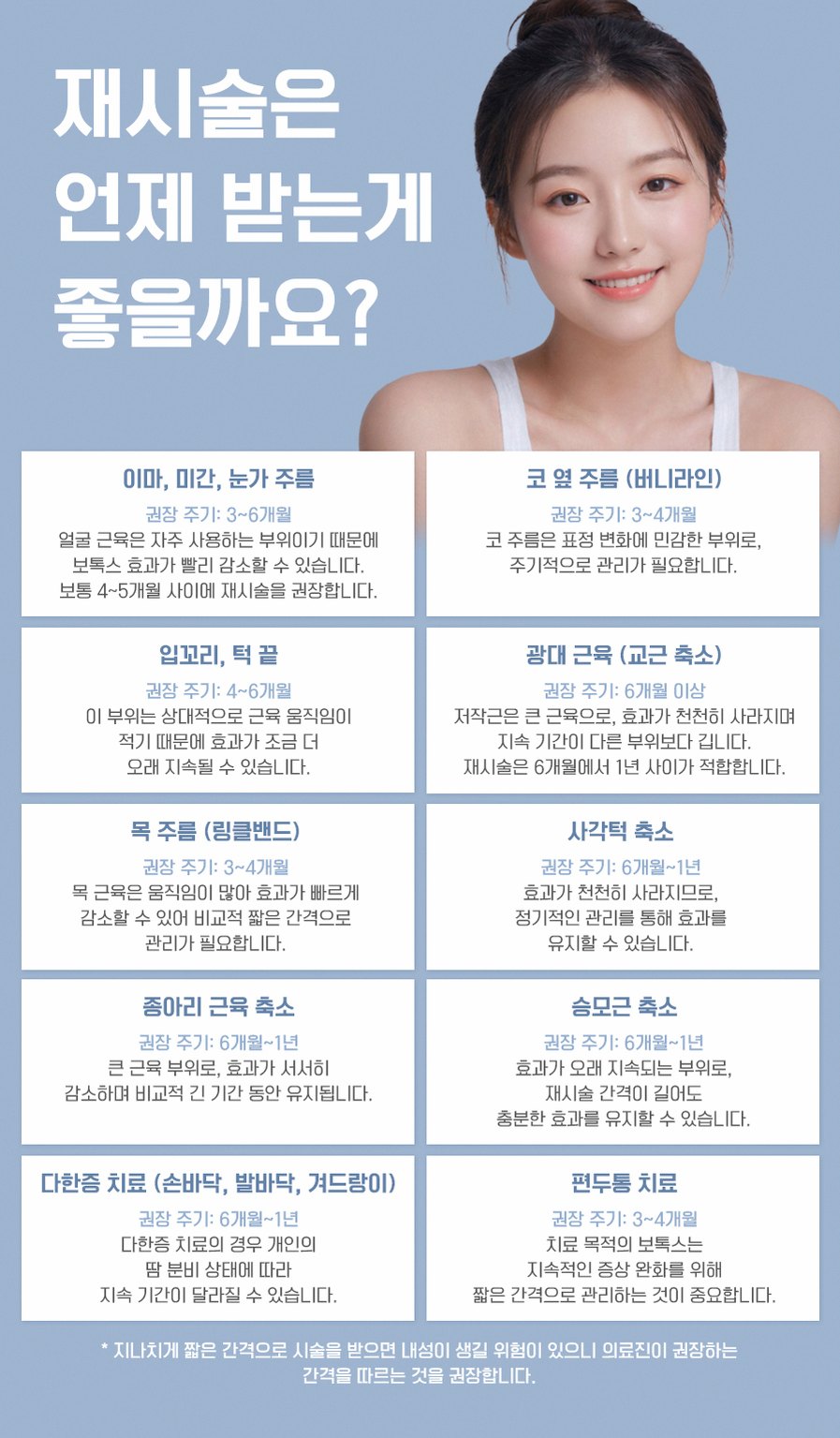
The effect does not appear instantly. Most people begin to notice changes within several days, with the full effect usually appearing over about two weeks. The results are temporary. Depending on the area treated, your muscle strength, and the product used, the effect often lasts for several months before gradually wearing off.
Because the effect is based on muscle relaxation, Botox is best for dynamic wrinkles, which appear or deepen when you move your face, such as when you frown, smile, or raise your eyebrows. For deeper static wrinkles that remain even when the face is at rest, Botox can still help prevent further deepening, but may need to be combined with other treatments.
People who may consider Botox near Dokbawi Station
Residents and office workers around Dokbawi Station often look for Botox for several reasons. Some want early, preventive care for fine lines in the forehead or around the eyes. Others are more concerned about a strong jawline and want a softer facial contour without surgery. There are also people who clench or grind their teeth and are interested in masseter Botox to reduce muscle bulk, sometimes after discussing it with their dentist.
Botox can be considered if you:
Have visible lines when you frown, smile, or raise your brows and want them softened.
Notice that your jaw looks wide or square from the front because of strong jaw muscles.
Want a slimmer lower face without surgical procedures.
Are planning to combine Botox with lifting, fillers, or skin resurfacing over time.
However, Botox is not suitable for everyone. People who are pregnant or breastfeeding, those with certain neuromuscular disorders, or those on specific medications may be advised to avoid it. This is why a careful medical consultation is important before any injections.
How to choose a Botox clinic around Dokbawi Station
When you search for Botox near Dokbawi Station, you will find both large cosmetic chains and smaller neighborhood clinics. Instead of focusing only on price or promotions, it can help to compare several key points.
Medical background and who actually injects
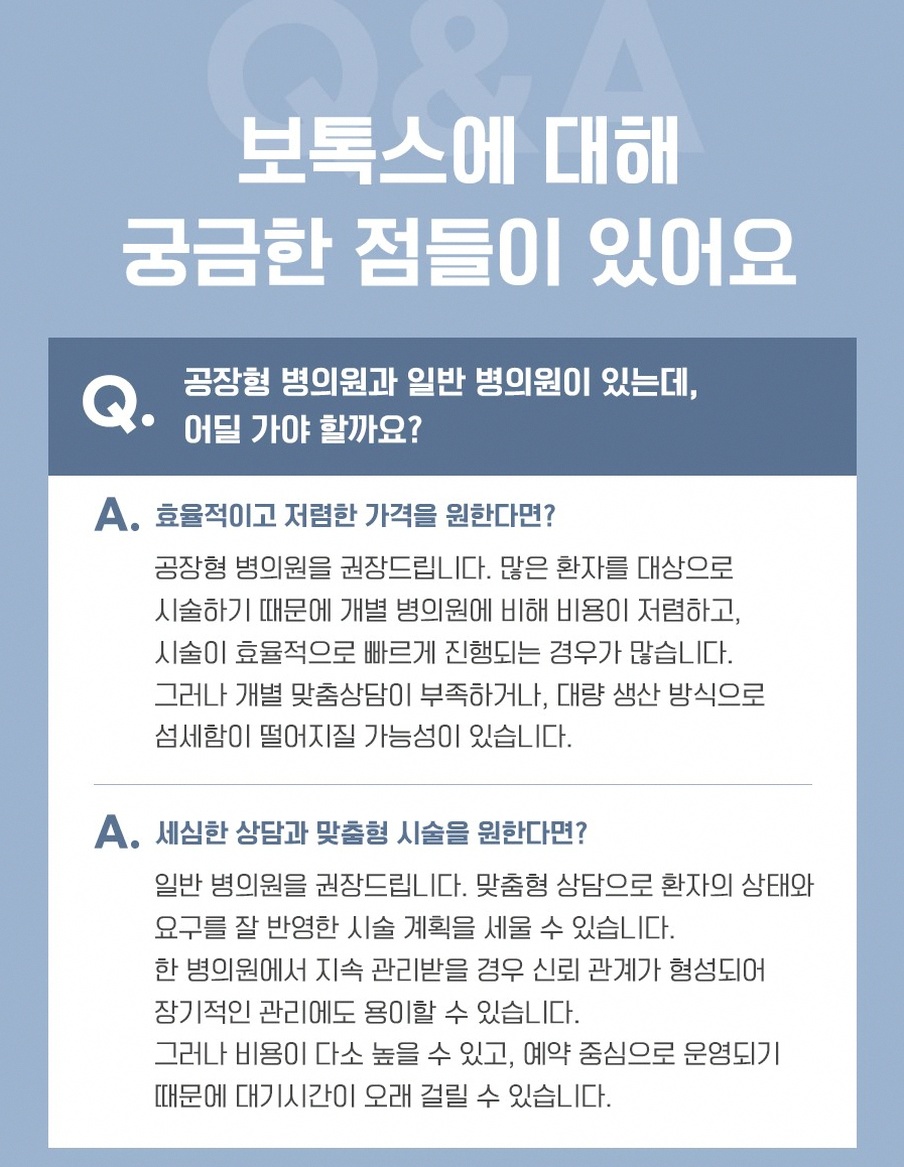
Ask who will perform the injections. In some large cosmetic centers, the person who consults with you may not be the same person who injects, or there may be frequent staff changes. In a one-doctor local clinic, the same physician usually handles both consultation and procedure. This consistency can make it easier to communicate your goals and understand what is realistically possible.
Consultation quality and facial analysis
A good Botox consultation should include a detailed look at how your facial muscles move. The doctor may ask you to frown, smile, squint, or clench your jaw to see where the muscles are strong and how your wrinkles form. You should have time to ask questions, discuss your medical history, and talk about previous procedures. Be cautious if the consultation feels rushed or if you are pushed toward a standard package without any individual assessment.

Follow-up system and realistic planning
Because Botox effects are temporary and can vary slightly between people, a clear follow-up plan is helpful. Some clinics schedule a check-up after a couple of weeks to see how you are responding. You should also know how to contact the clinic if you notice asymmetry, unexpected weakness, or other concerns.
A good clinic will explain that results are not permanent, that maintenance sessions are usually needed, and that there is always some individual variation. Be wary of absolute promises or guarantees.
Why some people prefer a small disease-and-aesthetics clinic
A neighborhood clinic that treats both medical skin conditions and aesthetic concerns can feel more reassuring for many patients. In this type of clinic, the same doctor who removes warts, treats cysts, manages inflammatory skin diseases, and handles scalp issues also performs Botox and other aesthetic procedures.
This dual focus offers several advantages:
The doctor is used to examining skin closely and can consider active inflammation, scars, or sensitive areas before deciding on Botox.
If you have chronic skin or scalp problems, you can discuss how Botox might interact with your current treatments.
There is no separation between a consulting doctor and a different injector; the same person plans and performs the procedure.
Some clinics of this type also manage scalp disease and hair loss and perform scalp injections. This can indicate familiarity with injection techniques in different tissue layers, which is relevant for precise, controlled Botox work.
In addition, a clinic that runs a dedicated foot care section for issues such as fungal infections or ingrown toenails, and sees many insurance-covered skin problems, is clearly not limited to purely cosmetic work. This medical foundation can be reassuring for people who are anxious about side effects or who want a more conservative, health-aware approach.
Features of a one-doctor system for Botox care
In a one-doctor system, the director personally conducts the consultation, designs the injection plan, and performs the procedure. For Botox, this can help maintain consistency between what you discuss and what is actually done.

Because the same doctor sees you over time, they can observe how your muscles respond to treatment and adjust the dose or injection points at future visits. For example, if your forehead tended to feel too heavy after a previous treatment elsewhere, the doctor might reduce the dose or change the pattern to preserve more natural movement.
Some clinics with this model also offer a broad aesthetic lineup beyond Botox, including fillers, lifting procedures using energy-based devices, thread lifting, laser toning, and skin boosters. For you, this means that if Botox alone is not enough for deeper wrinkles or sagging, a stepwise plan can be created in one place. You might start with Botox for dynamic wrinkles, then later add lifting devices for skin laxity or fillers for volume loss, without having to visit multiple locations.
Step-by-step Botox process at a local clinic
Although each clinic has its own routine, a typical Botox visit near Dokbawi Station might follow these steps.
Step 1: Initial consultation
You begin by explaining your main concerns. These might include forehead lines, frown lines, crow’s feet, a wide jawline, facial asymmetry, or a gummy smile. The doctor will review your medical history, including any chronic diseases, medications, allergies, and previous procedures.
This is the time to mention if you have sensitive skin, a history of keloid scars, or active skin conditions in the treatment area. The doctor should explain what Botox can and cannot do, discuss expected onset and duration, and outline possible side effects. Together, you agree on realistic goals.
Step 2: Facial analysis and treatment planning
Next, the doctor observes your facial expressions and muscle strength. You may be asked to frown, raise your eyebrows, smile broadly, or clench your jaw so the doctor can see exactly which muscles are overactive.
Based on this, the doctor decides on the injection areas and approximate units of Botox. Instead of using a one-size-fits-all package, the plan is tailored to your facial structure, muscle strength, and preferences. For example, some people prefer a very smooth forehead, while others want to keep more natural movement even if some lines remain.
Step 3: Procedure
Before the injections, the skin is cleansed. The doctor may mark the planned injection points. Fine needles are usually used to minimize discomfort. Most people describe the sensation as brief stinging or pressure rather than strong pain, but sensitivity varies. Depending on the area and your preference, methods to reduce discomfort, such as cooling, may be used.
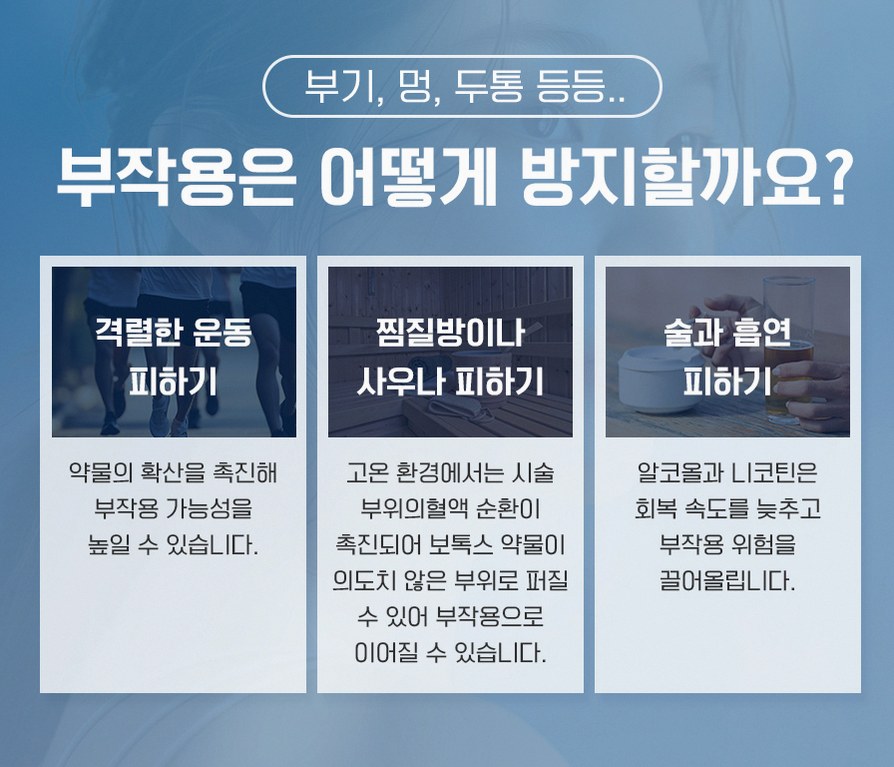
The injection itself is usually quick, often taking only several minutes once the plan is set. During the procedure, you may be asked to move certain muscles so the doctor can confirm the placement.
Step 4: Aftercare and follow-up
After the injections, you can usually return to everyday activities quite soon. However, you will be given instructions such as avoiding rubbing or massaging the treated area for a certain period, avoiding intense exercise or saunas immediately after, and monitoring for bruising or swelling.
Mild redness, swelling, or small bruises at injection sites can occur and usually improve over several days. In some cases, temporary asymmetry or a slightly heavy feeling can appear as the Botox starts to work. A follow-up visit or contact with the clinic can be arranged if you have concerns or if a small adjustment is needed.
Safety, side effects, and realistic expectations
Botox is widely used, but it is still a medical procedure and should be approached with the same seriousness as any other treatment. No clinic can guarantee perfect or permanent results.
Possible short-term side effects include redness, swelling, or bruising at the injection sites, mild discomfort, and temporary headache in some people. If the product spreads beyond the intended area, unintended muscle weakness can occur, such as a slightly drooping brow or uneven smile. These effects are usually temporary but can take weeks to fully resolve, so careful technique and conservative dosing are important.
You should always disclose your full medical history, including pregnancy or breastfeeding, neuromuscular disorders, bleeding tendencies, and all medications and supplements you are taking. This information helps the doctor judge whether Botox is appropriate for you and how to plan the treatment safely.
The effects of Botox gradually wear off over several months, and maintenance sessions are typically needed if you want to keep the result. Some people choose to repeat treatment two or three times a year, depending on how quickly their muscles recover movement.
Combining Botox with other treatments
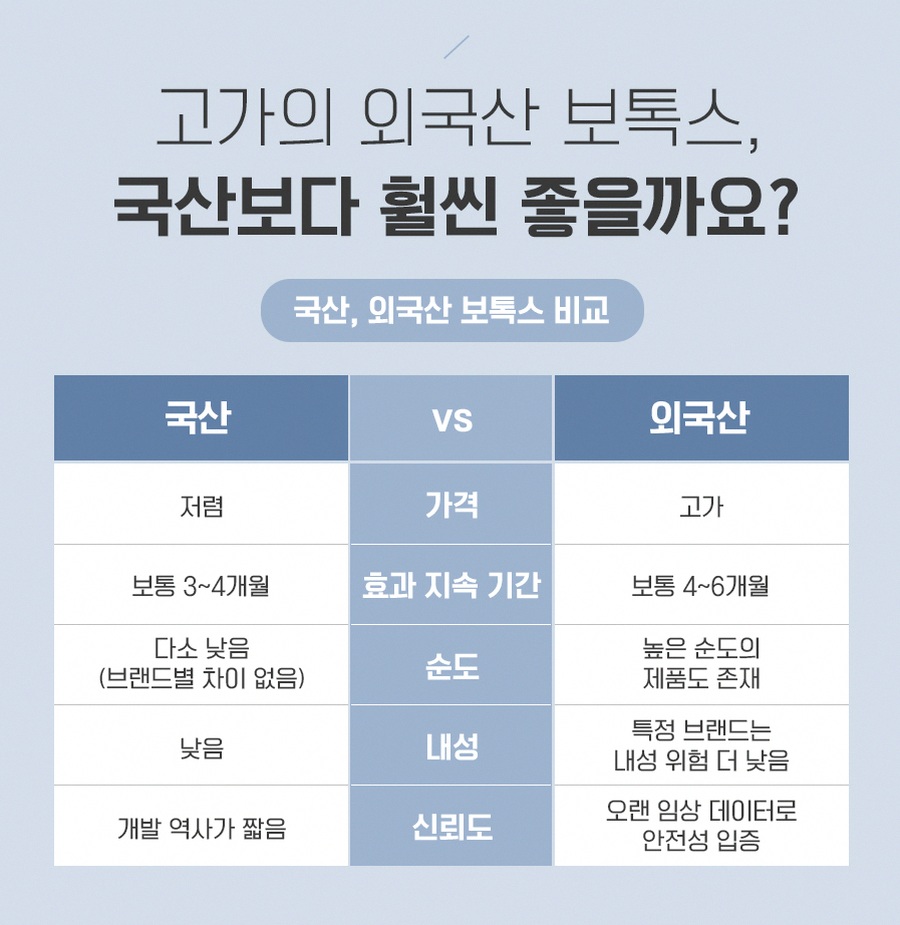
For some concerns, Botox alone may not be enough. Dynamic wrinkles respond well to muscle relaxation, but deeper static lines, volume loss, and skin laxity often require additional approaches.
In a clinic that offers a broad aesthetic lineup, the doctor may suggest combining Botox with energy-based lifting devices to address sagging, or with fillers to restore lost volume in areas like the cheeks or nasolabial folds. For acne scars or pigmentation, laser toning or skin boosters might be considered separately.
These combinations do not have to be done all at once. Many patients prefer a stepwise plan: starting with Botox, then adding other treatments gradually, especially if they are new to aesthetic procedures or are concerned about downtime.
Practical information for visitors near Dokbawi Station
For people living or working in Eunpyeong-gu, a clinic near Dokbawi Station can be convenient for stopping by after work or on weekends. Evening hours on weekdays allow office workers to schedule consultations and procedures without taking time off during the day.
At Malgeunsu Clinic, treatment is provided by Director Lee Hyo-su, and both consultations and procedures are done directly by this doctor under a one-doctor system. The clinic operates on weekdays from 11:00 to 20:00, with a lunch break from 14:00 to 15:00. On Saturdays, Sundays, and public holidays, it is open from 11:00 to 17:00 without a lunch break. It is important to note clearly that the clinic is closed on Wednesdays and Thursdays, so you should check the day of the week before planning a visit.
There is no official website, and the main online information channel is a major local portal listing. For overseas patients, this means that initial contact may be through messaging or phone via that portal rather than through a dedicated international patient site.
Online consultation and pre-visit preparation for overseas patients
If you are visiting Korea from overseas and considering Botox near Dokbawi Station, an online consultation before your trip can save time. When you contact the clinic, it is helpful to prepare:
Clear photos of your face from the front and sides, both at rest and while making expressions such as frowning, smiling, and raising your eyebrows.
A brief summary of your medical history, including chronic conditions, allergies, and any neuromuscular or bleeding disorders.
A list of current medications and supplements.
Information about previous Botox or filler treatments, including approximate dates, areas treated, and how long the effects lasted for you.
During the online consultation, you can discuss your main concerns, your available dates in Korea, and whether you are interested only in Botox or might consider combining it with other treatments later. The doctor can then suggest a realistic plan and approximate schedule.
Expected Korea visit timeline for Botox
For Botox alone, the required time in Korea is usually quite short. A common schedule might look like this:
Day 1: In-person consultation. After arriving in Seoul, you visit the clinic near Dokbawi Station for a detailed consultation and facial analysis. Some clinics may be able to provide injections on the same day as consultation depending on scheduling and medical assessment; confirm availability directly with the clinic in advance.
Days 2 to 3: Light observation. You can continue with normal sightseeing or business activities, following the basic aftercare instructions such as avoiding intense exercise and not rubbing the treated areas.
Around Day 7 to 14: Effect check. The full effect of Botox appears over one to two weeks. If you are still in Korea, you may schedule a brief follow-up visit. If you have already returned home, you can send photos and discuss the result online.
Because there is minimal downtime, Botox can usually be fitted into a short trip. However, if you plan to combine it with other procedures that may cause more swelling or redness, you should allow extra days.
Aftercare and daily life
After Botox, most people can go back to work or daily activities on the same day. To support a smooth recovery, clinics typically recommend:
Avoid rubbing, pressing, or massaging the treated areas for a certain period after the injections.
Avoid intense exercise, saunas, or very hot baths on the same day.
Sleep as you normally do, unless your doctor gives specific instructions.
Monitor for bruising, swelling, or unusual symptoms, and contact the clinic if you are worried.
Makeup can usually be applied gently after a short time, but you should check the clinic’s specific advice. If you experience strong pain, significant swelling, or symptoms that feel unusual for you, it is important to seek medical advice promptly.
Frequently asked questions about Botox near Dokbawi Station
How long does Botox last, and how often do I need to repeat it?
For most people, the effect of Botox begins within several days and reaches its peak around two weeks. The visible result commonly lasts for several months, but this can vary depending on the area treated, your muscle strength, and how your body metabolizes the product. Many patients choose to repeat treatment two or three times a year to maintain the effect. Your doctor can help you decide on an interval based on how your muscles recover and your personal preferences.
Is it better to get Botox at a large cosmetic clinic or a small local clinic near Dokbawi Station?
Both large cosmetic clinics and small local clinics can perform Botox, but the experience can be different. Large centers may have many staff and a high volume of procedures, which some people like. A small local clinic with a one-doctor system offers continuity, as the same doctor consults with you and performs the injections. In a clinic that also treats skin disease and scalp problems, your overall skin and health condition can be considered in the plan. The best choice depends on whether you value a more personal, medically oriented approach or a larger, more commercial setting.
What should I avoid doing after Botox injections?
After Botox, clinics usually advise avoiding rubbing or massaging the treated areas for a certain period, as this could potentially cause the product to spread beyond the intended muscles. It is also common to avoid intense exercise, saunas, and very hot baths on the same day. You can typically continue with light daily activities and work. Your doctor will give specific instructions based on the areas treated and your individual situation.
Can I get Botox if I have sensitive skin or existing skin disease?
Many people with sensitive skin or skin disease can still receive Botox, but it requires careful evaluation. The doctor should examine your skin and consider any active inflammation, infections, or ongoing treatments. In a clinic that routinely manages skin and scalp conditions, this assessment is part of everyday practice. You should inform the doctor about your full dermatologic history and current medications so that the plan can be adjusted or, if necessary, postponed for safety.
How do I know how many units of Botox I need?
The number of units is not something patients need to decide on their own. It depends on the area treated, the strength and size of your muscles, your past response to Botox, and how natural or strong you want the effect to be. During consultation, the doctor will observe your expressions, feel the muscle bulk if needed, and then recommend an approximate dose. Over time, if you return to the same doctor, the plan can be fine-tuned based on your previous results.

Can Botox be combined with lifting devices or fillers in one visit?
In many cases, Botox can be combined with other procedures such as energy-based lifting devices or fillers, either in the same visit or in a planned sequence. The decision depends on your goals, schedule, and tolerance for possible swelling or redness. Some doctors prefer to stage treatments so that the effect of each step can be evaluated clearly. In a clinic that offers multiple aesthetic options, you can discuss a stepwise plan that fits your travel dates and daily life.
Soft call to action for online consultation
If you are considering Botox near Dokbawi Station and prefer a careful, medically grounded approach in a small local clinic, you can start by arranging an online consultation. Preparing photos, your medical history, and your preferred dates in Korea will help the doctor understand your situation and suggest a realistic plan. From there, you can decide whether to schedule a visit during weekday evenings or on a weekend or public holiday, keeping in mind that the clinic is closed on Wednesdays and Thursdays.
This article is for general information only and does not replace a personal consultation with a qualified medical professional. Individual suitability, risks, and expected results should always be discussed directly with a doctor before proceeding with Botox or any other medical treatment.
- 공유 링크 만들기
- X
- 이메일
- 기타 앱


댓글
댓글 쓰기