expected effects, duration, and treated areas
- 공유 링크 만들기
- X
- 이메일
- 기타 앱
People living or working near Eungam-dong in Eunpyeong-gu often wonder what Botox can realistically do for everyday concerns: frown lines between the brows, forehead wrinkles, crow’s feet around the eyes, a strong jawline, or even bulky calves.
Botox is not a full-face transformation like major surgery. Instead, it gently calms down overactive muscles that create lines or make certain areas look bulky. When used with care, it can give a softer, more relaxed look while keeping your expressions and daily function.
At a neighborhood clinic such as Malgeunsu Clinic in Eungam-dong, the focus is usually on natural, subtle changes rather than dramatic makeovers. The effects you see depend on how your muscles work, how the injection points are designed, and how much product is used.
What Botox is and how its effects appear
Botox is an injectable treatment that temporarily relaxes specific muscles. It works by blocking the nerve signals that tell a muscle to contract. When a muscle moves less strongly, the overlying skin folds less, so expression lines can soften and bulky muscles can gradually look slimmer.
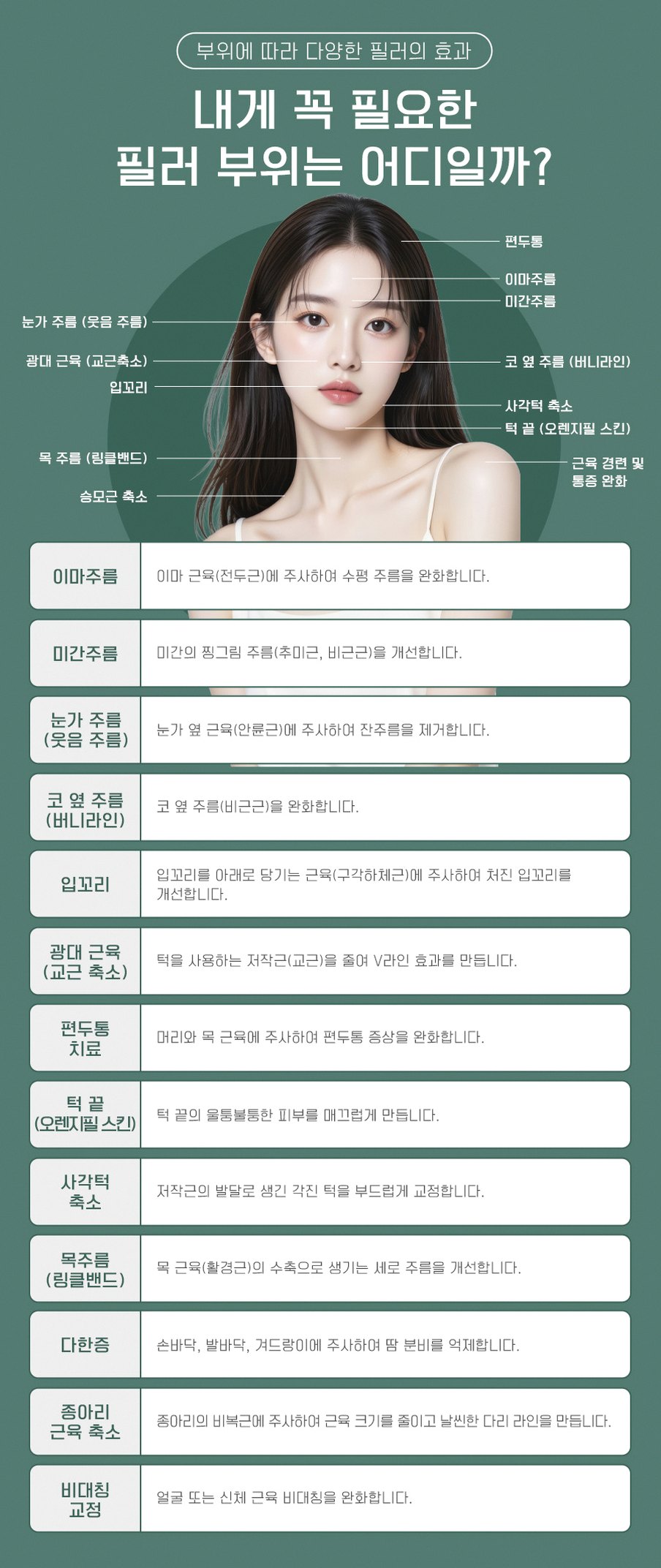
It is most effective for dynamic wrinkles, which appear when you move your face. Examples include frown lines when you are concentrating, forehead lines when you raise your eyebrows, and crow’s feet when you smile. It can also be used for muscle bulk, such as a square jaw from strong chewing muscles or thick calves from powerful calf muscles.
Static wrinkles are different. These are lines that remain even when your face is fully relaxed, often due to long-term folding plus skin aging and sagging. Botox can sometimes soften how strongly these lines deepen with movement, but it cannot fully erase deep, etched-in wrinkles or lift sagging skin on its own.
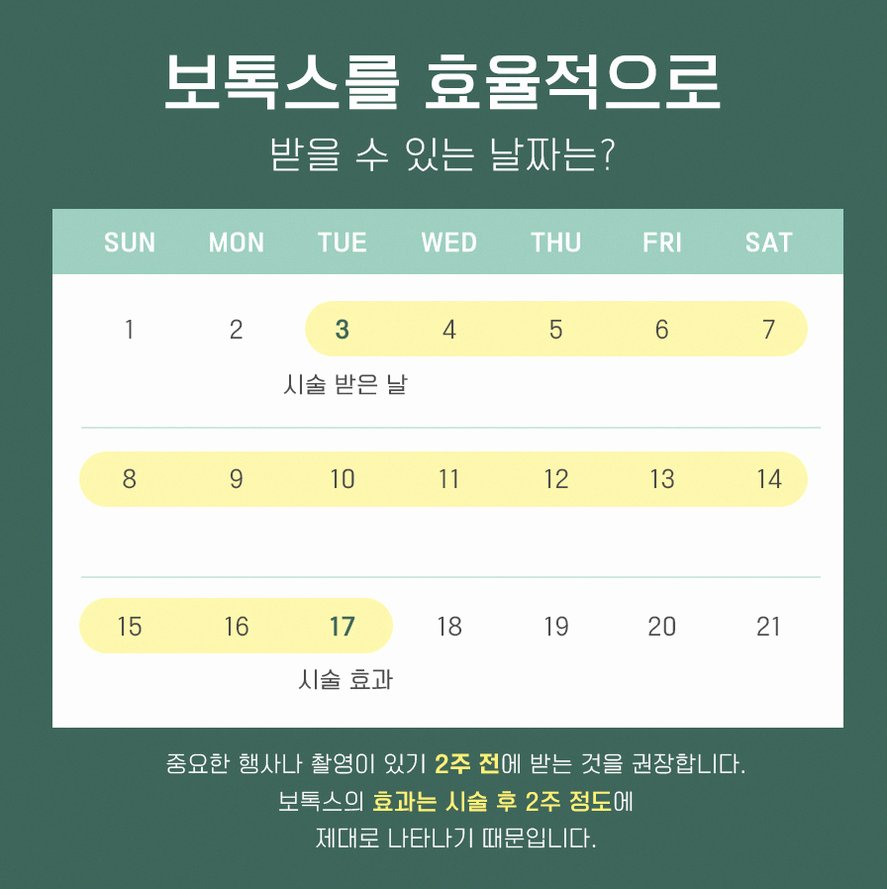
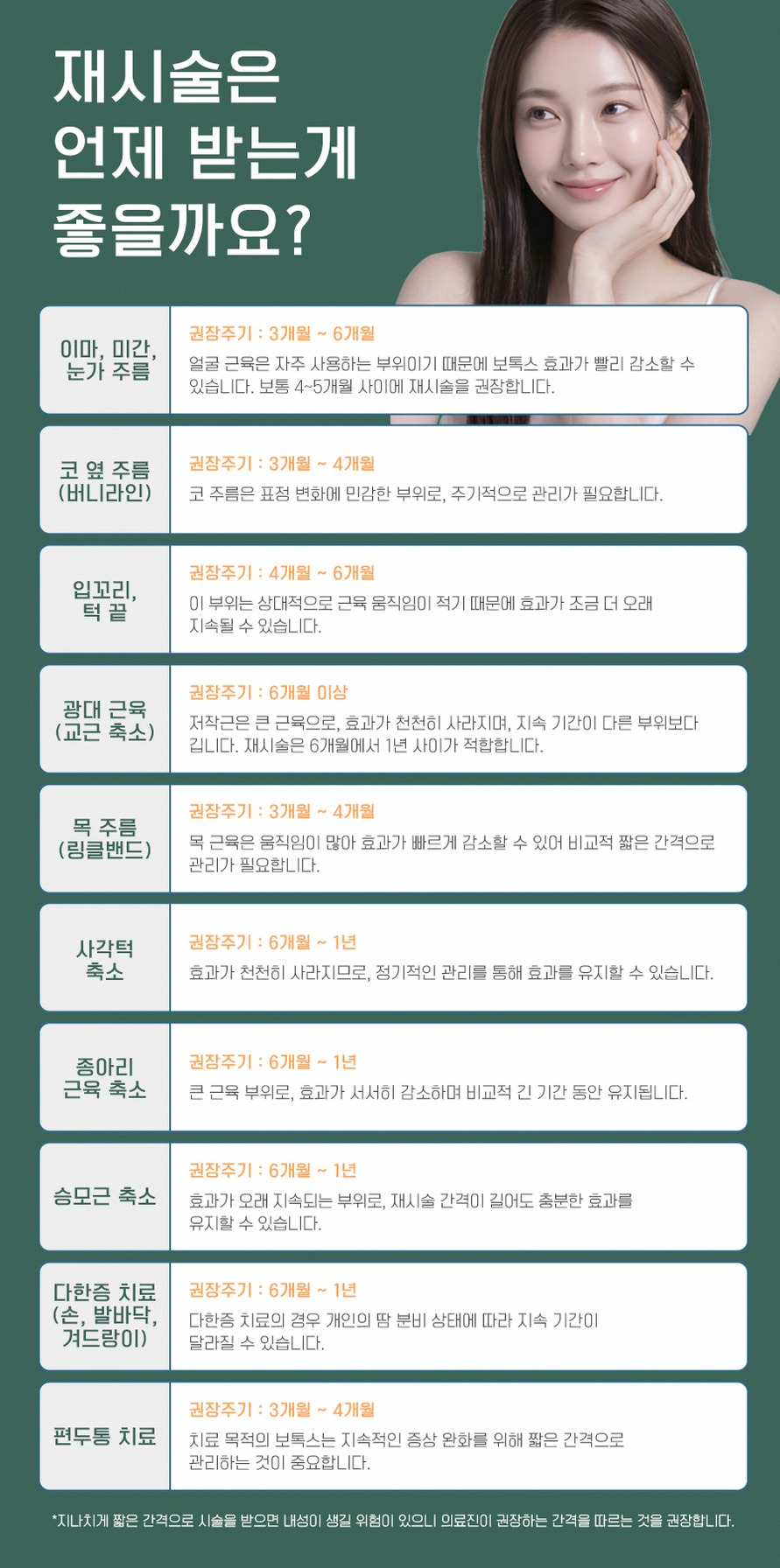
In terms of timing, most people start to notice changes a few days after injection. The effect usually builds gradually and reaches a peak around 1 to 2 weeks. After that, the effect slowly fades as nerve signals recover. Depending on the area treated, your muscle strength, and your metabolism, the visible effect generally lasts around 3 to 6 months.
A key point for many Eungam-dong residents is whether the result can look natural. When the doctor carefully assesses your muscle strength and patterns and adjusts the dose, the goal is to reduce excessive movement, not to freeze your face completely. You should still be able to smile, frown, and raise your eyebrows, just with less harsh wrinkling.
Main treatment areas and typical effects
Forehead and frown lines
For the forehead and the glabella (the vertical lines between the eyebrows), Botox can soften the lines you see when you raise your brows or frown. This often makes the face look less tired, less angry, and more relaxed.
However, the forehead area needs careful balance. If the upper forehead is relaxed too strongly while the brow-lifting muscles are not considered, some people can feel their eyelids are heavier. A thoughtful design aims to smooth lines while keeping enough lifting power so that your eyes still feel open and comfortable.
Crow’s feet around the eyes
Crow’s feet are the fine lines that fan out from the outer corners of the eyes when you smile or laugh. Botox in this area can make these lines less noticeable during expression, giving a fresher, more rested look.
Because the eye area is delicate, the dose is usually kept modest. The aim is to keep your natural smile while softening the creasing that makes makeup settle into lines or makes you look more tired than you feel.
Jawline (masseter muscle)
In people with a strong, square jawline due to powerful chewing muscles, Botox can be used to slim the lower face. The injections are placed into the masseter muscles on each side of the jaw. Over several weeks, as the muscle works less intensely, it can gradually reduce in volume, making the jawline look more tapered.
Chewing function should still be preserved. A careful dose can reduce excessive clenching or grinding without making it hard to eat normal foods. The contour change is not immediate; it usually becomes noticeable after about 4 to 6 weeks and can last several months.
Nose and mouth area
Smaller, detailed Botox treatments around the nose and mouth can also help with facial harmony.
For example, bunny lines on the nose (the wrinkles that appear when you scrunch your nose) can be softened. A gummy smile, where a lot of gum shows when you smile, may be reduced by relaxing the muscles that lift the upper lip. Downturned mouth corners can sometimes be gently lifted by weakening the muscles that pull the corners downward.
These areas require especially careful dosing, because the muscles are closely linked to your smile and speech. The goal is a subtle change that most people around you will just see as a more relaxed, pleasant expression rather than an obvious procedure.
Calf and shoulder contouring
Beyond the face, Botox can be used to slim bulky calves or relax tight shoulder muscles for a softer shoulder line. In the calves, it can gradually reduce the size of thick, muscular legs. In the shoulders, it can help create a more delicate shoulder contour and may reduce tension in some cases.
For this article, the main focus is facial Botox, but it is useful to know that similar principles apply: effects appear gradually, function should be respected, and the results are temporary.
What influences Botox results in a neighborhood clinic setting
Several factors influence how Botox will look and how long it will last for people in Eungam-dong.
Your muscle strength and habits matter. If you have a strong habit of frowning, raising your brows, or clenching your jaw, you may need a different approach compared to someone with milder movements. Stronger muscles may require more units, and the effect may feel different or fade a bit faster as your body recovers.
Age and skin condition also play a role. Younger patients with early dynamic wrinkles often see a clearer smoothing effect because their skin still has good elasticity. Older patients with deeper static wrinkles or sagging skin may see improvement in expression lines, but the etched-in folds or drooping may need additional treatments such as lifting devices or other skin procedures for a more complete improvement.
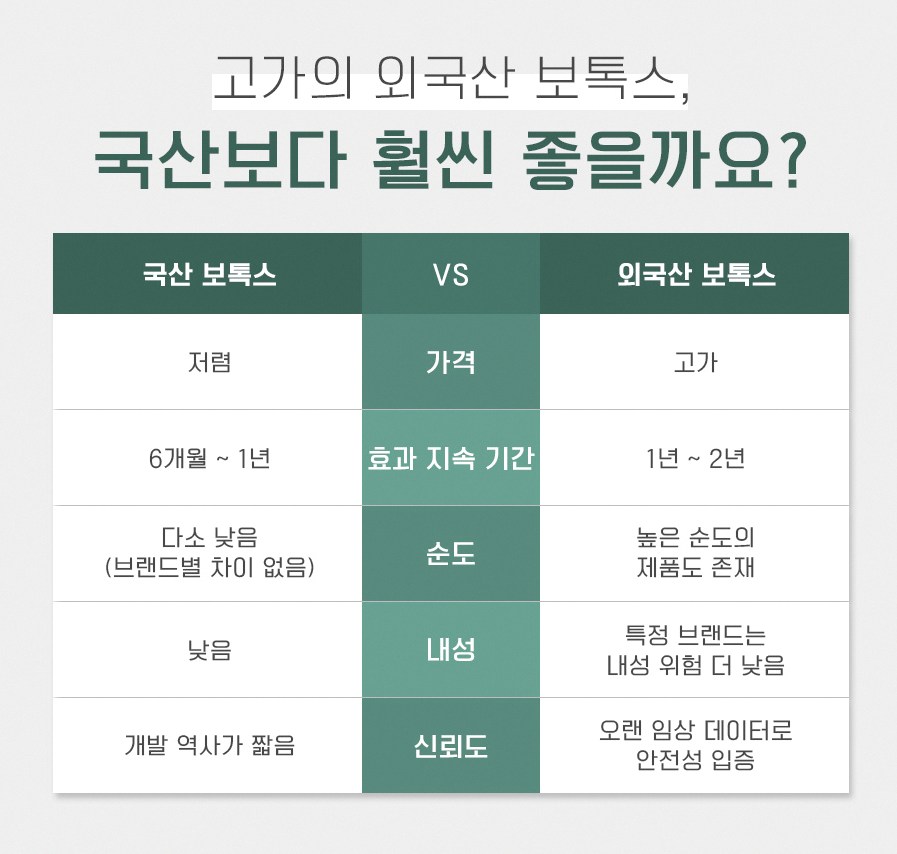
The type of product and the amount used are chosen based on the area and the purpose. Different formulations and unit counts can be used for a very mobile area like the forehead compared with a large muscle like the jaw. This is planned during consultation rather than using a one-size-fits-all pattern.
Technique and design are crucial. A careful doctor won't simply inject fixed textbook points — they observe how your muscles move, where your skin folds, and how thick each muscle feels. Injection depth, angle, and spacing are tailored to your face rather than copied from someone else. For example, treating dynamic lines around the eyes may require different spacing on a stronger side to preserve natural movement.
Finally, consistency over time matters. Repeating Botox at appropriate intervals can help maintain smoother lines and may prevent some wrinkles from deepening further. However, doing it too frequently or using excessive doses can lead to an overly frozen look or unnecessary weakening of muscles. A balanced schedule is usually safer and more natural.
How a skin-disease-treating doctor approaches Botox
One feature of a neighborhood clinic that handles both medical and aesthetic care is that the same doctor is used to seeing how skin and underlying tissues behave in many different situations.
At Malgeunsu Clinic, the physician who performs Botox also treats conditions such as warts, corns, burns, alopecia, and scalp problems, along with other aesthetic procedures. This background can be helpful because they regularly observe how skin reacts, how it heals, and how inflammation or scarring can appear.
Director Lee Hyo-su personally conducts the consultation, designs the injection plan, performs the Botox injections, and sees patients again for follow-up. That continuity can make it easier to keep the design and dosage consistent over time, adjusting gradually based on how you responded last time.
This is different from some large cosmetic centers where you may consult with one doctor but be injected by another, or where staff change frequently. In a smaller, local setting, the person who listens to your concerns is usually the same person who plans and carries out the procedure.
Because the clinic also has multiple lifting devices, such as InMode, Shurink Universe, Tencera, and Ten Triple, it can suggest when Botox alone is likely to be enough and when a combined approach might be more suitable. For example, someone with fine forehead lines but no sagging may do well with Botox alone, while someone with drooping brows and deep folds might be advised to consider lifting plus Botox rather than relying on injections alone.
Procedure flow for Botox at a local Eungam-dong clinic
Initial consultation
Your visit usually starts with a consultation. The doctor will look at your facial expressions, ask you to frown, smile, and raise your eyebrows, and check how your muscles move. They will also review your medical history, including any neuromuscular diseases, medications, bleeding tendencies, pregnancy, or breastfeeding.
You can explain what bothers you most: for example, “my forehead looks too wrinkled when I talk,” or “my jaw looks too wide in photos,” or “I want my eyes to look less tired.” It is helpful to be honest about how much change you want, from very subtle to more noticeable.
Design of injection points
Next, the doctor may mark injection points on your skin. These marks are not random; they are based on how your muscles move and where the skin folds. For the forehead, the design should consider both the horizontal lines and the lifting function of the brows. For the jaw, the doctor will feel the masseter muscle while you clench.
During this stage, the expected degree of movement reduction is discussed. For example, you might agree that you still want to raise your brows a little, or that you want your frown lines to be much weaker but not completely gone. This shared understanding helps avoid misunderstandings later.
Preparation and injection
Before injection, the skin is cleansed. Some clinics use cooling or a topical anesthetic cream to help reduce discomfort, especially for more sensitive areas. The injections themselves are usually quick, often taking only a few minutes, but they require precision.
You may feel brief stinging or pressure at each injection point. Most people can tolerate this without major difficulty, but pain sensitivity varies. The doctor will usually ask you to relax your face and breathe steadily while they work.
Immediately after the procedure
Right after Botox, you may see small raised bumps, mild redness, or slight swelling at the injection sites. These usually settle within minutes to a few hours. Some people may develop small bruises, which can take several days to fade.
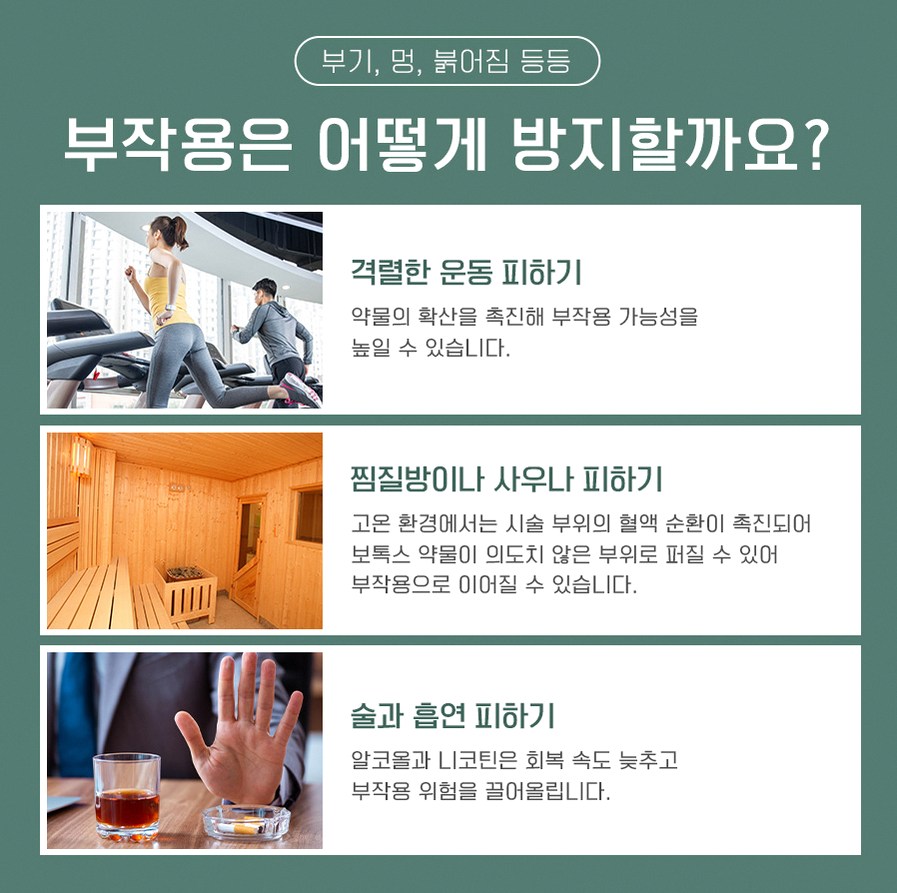
Most daily activities can be continued, but you may be advised to avoid rubbing or massaging the treated area, avoid lying flat for a few hours, and postpone intense exercise or sauna visits for a short period. These precautions help reduce the risk of the product spreading to unintended areas.
Follow-up and evaluation
The full effect of Botox is usually judged about 1 to 2 weeks after injection. At that time, you can check in with the clinic if you have concerns or questions about the result. Some clinics may discuss minor adjustments depending on their policy and your response.
It is important to remember that no clinic can promise a specific exact duration or effect, because each person’s body responds differently. However, seeing the same doctor each time makes it easier to fine-tune your plan over several sessions.
Safety, side effects, and realistic limitations
Like any medical procedure, Botox has possible side effects and limitations.
Common temporary reactions include slight pain at the injection site, mild swelling, redness, or bruising. Some people may feel a sense of heaviness or tightness in the treated area for a short time as they get used to the reduced movement.
If dosage or placement is not ideal for your anatomy, temporary functional changes can occur. Examples include uneven eyebrows, eyelid heaviness, a slightly altered smile, or chewing fatigue in jaw treatments. These effects are usually temporary as the Botox wears off, but they can cause discomfort or self-consciousness, so they should be discussed in advance.
Botox is not suitable for everyone. People with certain neuromuscular diseases, specific medication use, or particular medical conditions may need to avoid it or proceed with extra caution. Pregnancy and breastfeeding are also times when Botox is generally avoided.
No clinic can guarantee zero side effects or a fixed duration of effect. Results vary with individual biology, lifestyle, and previous treatment history. It is helpful to tell your doctor about your work schedule, social events, and tolerance for visible changes so that timing and intensity can be planned appropriately.
Why some Eungam-dong residents choose a neighborhood clinic for Botox
For many people in Eungam-dong and nearby areas of Eunpyeong-gu, convenience is a major factor. A clinic that offers evening hours on weekdays and is open on weekends and public holidays makes it easier to fit Botox into a busy life.
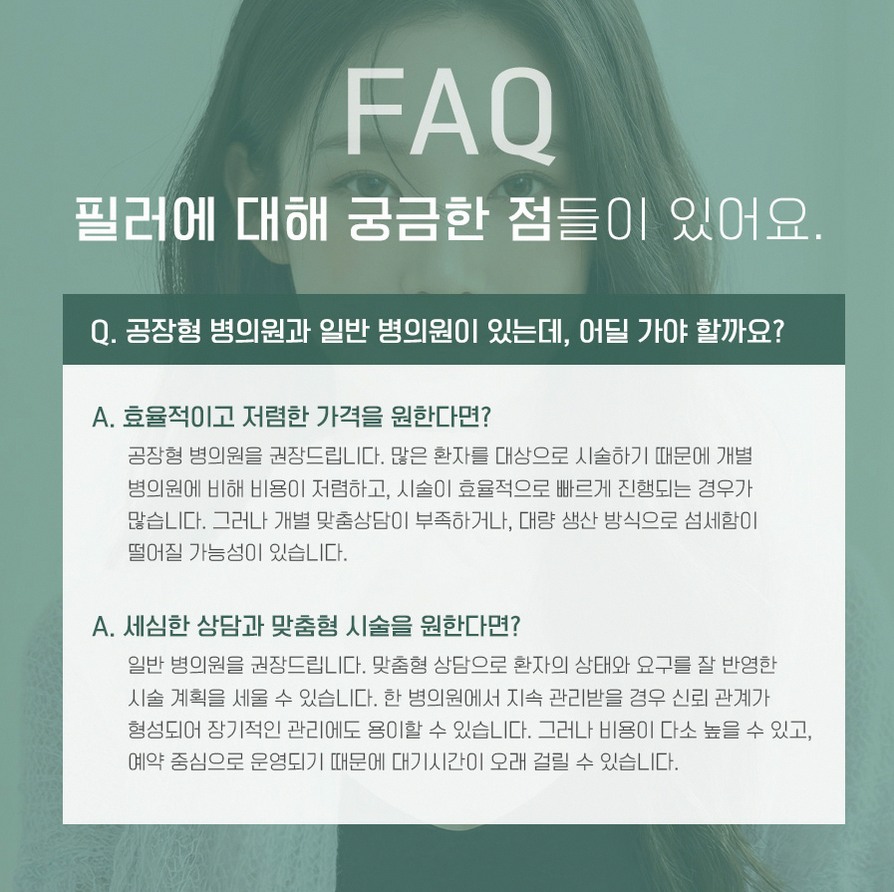
Malgeunsu Clinic provides consultations and procedures on weekdays up to 20:00, which can suit office workers who finish work later in the day. It is also open on Saturdays, Sundays, and public holidays from 11:00 to 17:00, which is useful for caregivers, students, and those who prefer not to take time off work. It is important to note that the clinic is closed on Wednesdays and Thursdays, so checking the day before you visit can prevent inconvenience.
Another reason some residents prefer a neighborhood clinic is continuity of care. The same physician can look after both medical skin issues, such as warts, corns, burns, and scalp problems, and aesthetic concerns like wrinkles and contouring. This can be reassuring for people who want one place to manage their skin and scalp health over time.
The atmosphere is often calmer than in large chains, with less pressure for aggressive package sales. In addition to Botox and other aesthetic procedures, the clinic also offers IV drips and runs a dedicated foot center, reflecting its role as a general medical clinic rather than a one-service shop.
Practical tips before getting Botox in Eungam-dong
Before you book Botox near Eungam-dong, it helps to prepare a few things.
First, clarify your goals. Decide whether you want a very subtle change that only you will notice, or a more visible softening of certain lines. For example, you might want your forehead to move a little less but not be completely still, or you might want your jawline to look slimmer in photos without affecting your ability to eat comfortably.
Second, share your history. If you have had Botox before, tell the doctor where, when, and what you liked or disliked about the result. If you experienced side effects, even mild ones, mention them. This information helps the doctor adjust the plan for you.
Third, plan your timing. Because the effect builds over several days and bruises can take time to fade, it is wise to schedule injections at least 1 to 2 weeks before important events such as weddings, work presentations, or photo sessions.
Fourth, ask about combination options if you have sagging or deep, static wrinkles. Botox can help with movement-related lines, but it cannot tighten loose skin or fill deep grooves by itself. A clinic that also has lifting devices or other treatments can explain whether a combined plan might be more realistic for your situation.
Finally, confirm the clinic’s hours and closed days.
Frequently asked questions about Botox effects in Eungam-dong
How long do Botox effects usually last for forehead and jawline?
For most everyday patients, forehead Botox effects typically last around 3 to 4 months, sometimes a bit longer or shorter depending on muscle strength and metabolism. Jawline (masseter) Botox often shows contour changes that can last around 4 to 6 months. Over time, with repeated treatments, some people feel the effect lasts slightly longer, but this is not guaranteed and varies by individual.
When will I start to see the effect after a Botox injection?
You usually do not see the full effect immediately. Many people begin to notice a change in movement within 3 to 5 days, with the maximum effect appearing around 1 to 2 weeks after treatment. This is why follow-up assessments are often scheduled or recommended about two weeks after your injection rather than the next day.
Can I still make natural facial expressions after Botox?
Yes, natural expression is usually possible when the dosage and design are tailored to your face. The aim in a neighborhood setting like Eungam-dong is often to reduce excessive movement, not to freeze the face completely. During consultation, you can discuss how much movement you want to keep so the doctor can adjust the plan accordingly.
Is it safe to get Botox at a neighborhood clinic instead of a large cosmetic hospital?
Botox is a medical procedure, so safety depends more on the doctor’s training, experience, and approach than on the size of the facility. A neighborhood clinic where a single physician, such as Director Lee Hyo-su, consistently handles consultation, injection, and follow-up can offer continuity and careful monitoring. Regardless of clinic size, you should always discuss your medical history, understand possible side effects, and feel comfortable asking questions before proceeding.
What should I avoid doing right after Botox injections?
After Botox, you are usually advised to avoid rubbing or massaging the treated areas for several hours, avoid lying flat for a short time, and postpone intense exercise, sauna, or hot baths for the rest of the day. These precautions help reduce the chance of the product spreading to nearby muscles. Your doctor may give you specific instructions based on the area treated and your lifestyle.
How often can I repeat Botox, and is there a risk it will stop working over time?
Many people repeat Botox every 3 to 6 months, depending on how quickly their movement and lines return. It's generally better to wait until the effect has clearly started to fade rather than re-injecting too early. In rare cases, very high cumulative doses or certain clinical formulations can lead to antibody formation and a reduced response, but this is uncommon for typical cosmetic use — most patients will not encounter it. Discussing an appropriate schedule and any concerns with your treating physician can help balance results and safety.
Closing: Setting realistic expectations for Botox in Eungam-dong
For residents and workers around Eungam-dong, Botox can offer noticeable yet natural improvement in expression lines and facial contour when it is carefully planned and injected. It is most effective for softening dynamic wrinkles and gently slimming certain muscles, with effects that appear gradually and fade over several months.
Being treated in a local clinic where the same physician manages both skin disease and aesthetic procedures, and personally follows you over time, can make it easier to adjust your plan as your face and needs change. When choosing where to receive Botox in Eungam-dong, it is wise to prioritize thorough consultation, realistic expectations, and safety rather than focusing only on price or speed.
If you are considering Botox near Eungam-dong and want subtle, everyday-friendly changes, you can start by gathering your questions and concerns, then arranging a consultation at a local clinic such as Malgeunsu Clinic to discuss what is suitable for your individual situation.
- 공유 링크 만들기
- X
- 이메일
- 기타 앱


댓글
댓글 쓰기