Ultherapy-style lifting and filler clinic in Yeokchon-dong, Eunpyeong-gu
- 공유 링크 만들기
- X
- 이메일
- 기타 앱
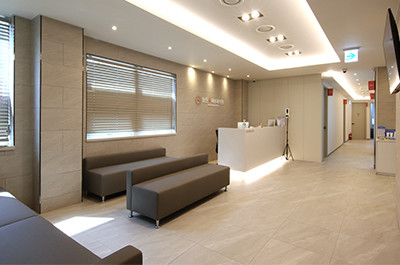
Choosing Ultherapy-style lifting in Yeokchon-dong: why filler planning matters
Many people look for ultrasound lifting devices expecting a clear lifting effect, but later realize that tightening alone does not always solve hollow or sunken areas.
For many faces, filler is just as important as the lifting device. Ultrasound or other energy-based lifting may help tighten and slightly lift, while filler restores lost volume and supports the facial structure. This article explains how filler works, how it can be combined with lifting devices similar to Ultherapy, and how to choose a safe, trustworthy clinic in Yeokchon-dong and the wider Eunpyeong-gu area.
What filler is and what it can and cannot do
Filler is an injectable gel-like material, most commonly based on hyaluronic acid, a substance that is naturally present in the body. It is used to restore volume, enhance contours, and soften the appearance of wrinkles and folds. When placed in the right layer and amount, filler can help the face look fresher and more balanced without surgery.

Typical areas for filler include under-eye hollows, nasolabial folds around the nose and mouth, marionette lines at the corners of the mouth, cheeks, chin, jawline, lips, nose bridge, and drooping mouth corners. In the context of lifting, filler is often used to support the midface, jawline, and chin so that the overall contour looks firmer and more defined.
However, filler has its limits. It does not replace a surgical facelift and it does not stop the aging process. It may improve the appearance of sagging by supporting tissues, but it cannot pull heavily sagging skin back to where it was many years ago. Results are also not permanent; hyaluronic acid filler gradually breaks down over time and may need maintenance treatments.
Realistic expectations are important. Filler can improve certain shadows and lines, may give a subtle lifting effect in some areas, and can make the face look more rested. It cannot guarantee dramatic or permanent lifting, and it should not be used to chase extreme changes. A good plan focuses on natural harmony rather than simply adding volume.
Ultrasound lifting versus filler: different roles, better together
This energy stimulates collagen remodeling and tightening over time. Patients often choose these treatments for mild to moderate skin laxity on the cheeks, jawline, and neck.
Filler works in a different way. Instead of tightening, it adds structure and volume in specific points. For example, filler in the cheeks can restore a youthful curve, filler in the chin can improve profile balance, and filler along the jawline can sharpen the lower face contour.
In many cases, the best result comes from combining the two approaches. Energy-based lifting can help firm and slightly lift the overall tissue, while filler is used to correct hollows, support key points like the midface or chin, and refine the contour. If you only tighten loose skin without replacing lost volume, the face may still look tired or gaunt. If you only use filler without addressing laxity, the result can look heavy or unnatural.

A clinic in Yeokchon-dong that offers several lifting and contouring devices, such as InMode, Shurink Universe, Tencera, and Ten Triple, has more options to tailor the energy-based treatment to your skin thickness, laxity, and pain tolerance. After choosing the appropriate device and settings, the doctor can then plan filler to complement the lifting effect, instead of using a one-size-fits-all protocol.
The order of treatments also matters. Often, energy-based lifting is performed first so that collagen tightening can start, and filler is added afterward to fine-tune volume and shape. In other situations, limited filler may be placed first to support certain structures, followed by lifting later. This decision should be made by a doctor who understands both skin condition and facial anatomy, and who can explain the reasoning clearly.
Why a clinic with both disease and aesthetic experience can help
When you are comparing clinics in Yeokchon-dong and Eunpyeong-gu, you will find both purely aesthetic centers and clinics that also treat skin diseases. A clinic that handles skin disease alongside cosmetic procedures may offer some advantages for filler planning.
Doctors who regularly see conditions such as warts, cysts, burns, scalp problems, and hair loss are used to looking closely at skin health, inflammation, and healing patterns. This background can be helpful when assessing whether your skin is ready for filler, how it might react, and how to minimize risks like prolonged redness or scarring.
A local medical clinic that covers skin disease, cosmetic procedures, IV drips, and even a dedicated foot center for issues like athlete’s foot, ingrown toenails, calluses, and laser treatment for fungal infections, often functions like a neighborhood primary-care style skin clinic. The same doctor may manage both your medical and aesthetic concerns, which can make communication smoother and follow-up easier.
Single-doctor system and continuity of care
In some large aesthetic centers, one person performs the consultation and another person performs the injections. This can sometimes lead to gaps between what you discussed and what is actually done.

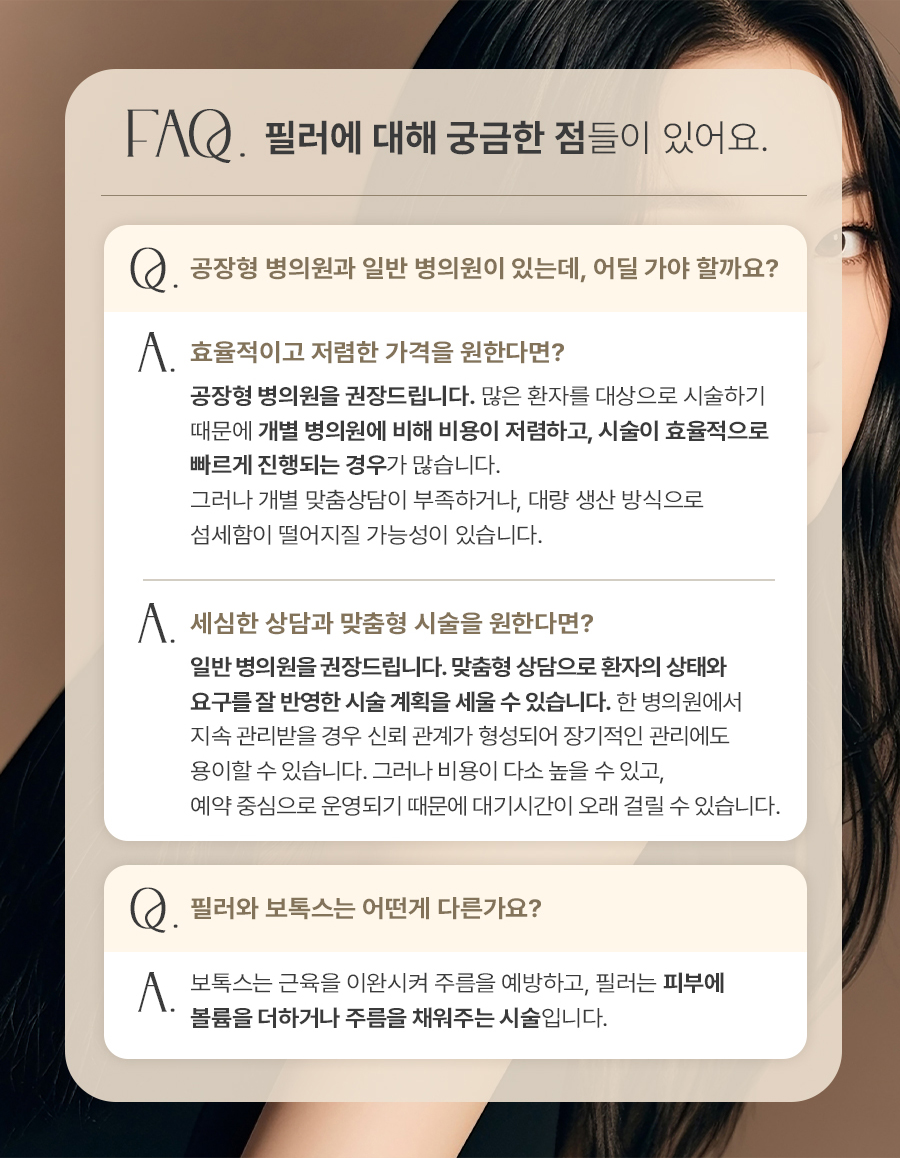
In a single-doctor clinic system, like the one run by Dr. Lee Hyo-su in Yeokchon-dong, the same physician sees you from consultation through to treatment and follow-up. Dr. Lee personally listens to your concerns about sagging, asymmetry, or previous filler experiences, examines your skin and facial structure, and then performs the injections.
This continuity can reduce miscommunication and allows the doctor to adjust the plan in real time based on how your tissues respond during the procedure. It also supports a philosophy of careful, experience-based treatment rather than a high-volume, commercial chain style. For many international patients, this kind of personalized approach feels more reassuring when planning filler and lifting combinations.
How filler treatment typically proceeds
The general process for filler treatment, which many safe clinics follow, includes several steps.
First is consultation. The doctor takes a detailed medical history, including allergies, medications, and previous procedures. They analyze your face from different angles, looking at skin quality, volume loss, and muscle activity. This is the time to explain what bothers you most, such as deep nasolabial folds, flat cheeks, or a weak chin.
Second is treatment planning. Based on your anatomy and goals, the doctor suggests which areas to treat, an approximate amount of filler, and the type of filler that may be appropriate. For example, a softer filler might be chosen for under-eye hollows, while a firmer filler may be used for structural support in the chin or jawline. If you are also considering ultrasound or other lifting devices, the doctor will discuss the sequence and timing.

Third is preparation. The skin is cleansed carefully, and topical anesthetic cream or cooling may be used to help reduce discomfort. Some fillers also contain a local anesthetic, which can make the injections more tolerable.
Fourth is the injection itself. The doctor uses fine needles or blunt-tipped cannulas, depending on the area and technique. They work gradually, checking symmetry and contour as they go. You may be asked to sit up or move your facial muscles so the doctor can see how the filler behaves in motion.
Fifth is the immediate check and aftercare instructions. Right after the procedure, there may be some swelling or redness. The doctor will check for obvious asymmetry or irregularities and may gently massage certain areas. You will receive instructions about what to avoid for a short period, such as intense exercise, sauna, or alcohol, and how to manage mild swelling or bruising if they occur.
Finally, a follow-up visit may be suggested. This can be useful to check how the filler has settled, whether any small adjustments are needed, and to discuss long-term maintenance. For international patients, it is helpful to plan this follow-up within your travel schedule, or arrange an online check-in if an in-person visit is not possible.
Safety points and who should be cautious
Filler is widely used, but it is still a medical procedure and should be approached carefully. Some people are not good candidates, or require extra caution.
In general, people who are pregnant or breastfeeding, those with active skin infections at the planned injection site, severe allergies, certain autoimmune conditions, or a history of serious filler complications should discuss the risks and benefits very thoroughly with the doctor. In some cases, it may be safer to postpone or avoid filler.
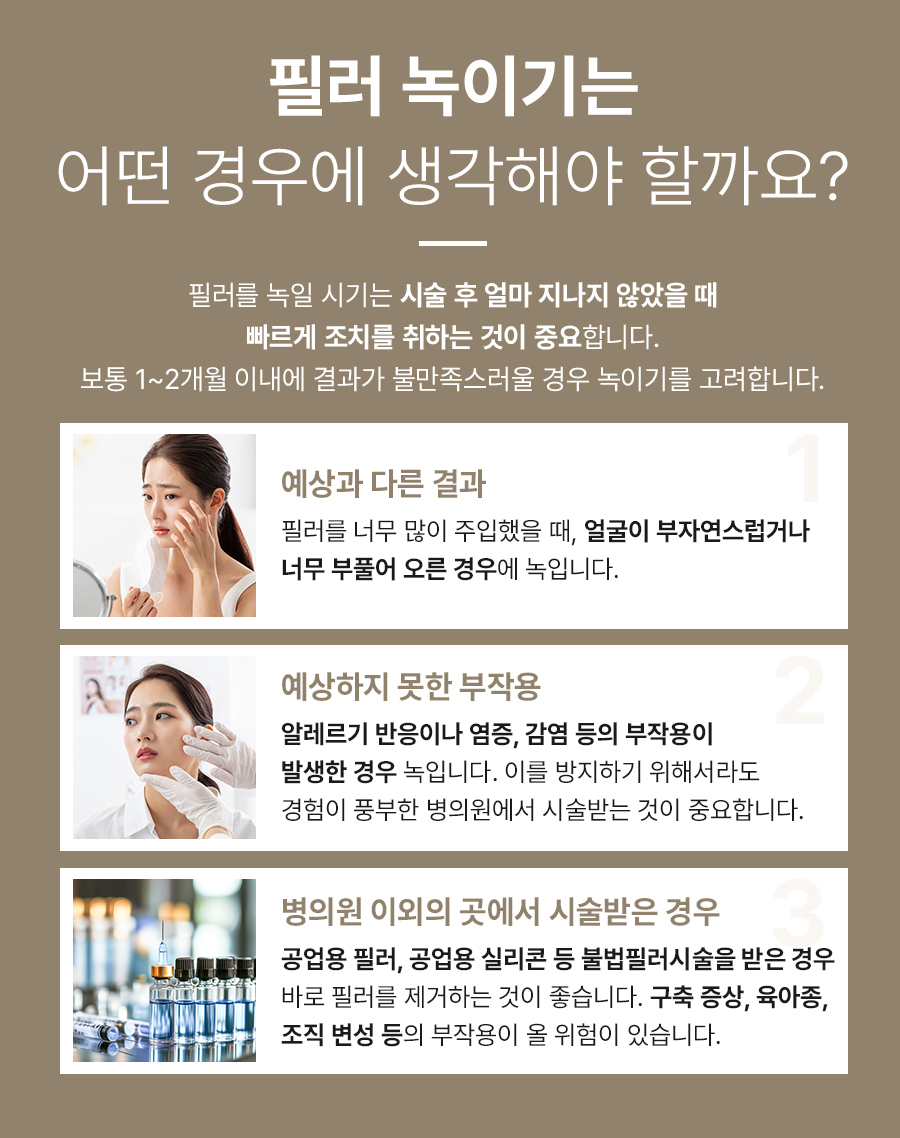
Common short-term side effects can include redness, swelling, bruising, tenderness, or a feeling of fullness in the treated area. These usually improve over several days. Rare but more serious complications, such as vascular problems or infection, can occur. A medically trained doctor who understands facial anatomy and emergency management is important for minimizing and handling such risks.
To support safety, you should share your full medical history, including any blood-thinning medications or supplements, and follow all pre- and post-treatment instructions. Avoiding alcohol, very intense exercise, and high-heat environments like saunas for a short period after treatment is often recommended, but your doctor will give specific guidance.
How to choose a filler clinic in Yeokchon-dong and Eunpyeong-gu
Check whether a licensed doctor with experience in both skin and aesthetics performs the injections personally. Ask if the same doctor will handle your consultation, treatment, and follow-up, or if different staff members will be involved at each stage.
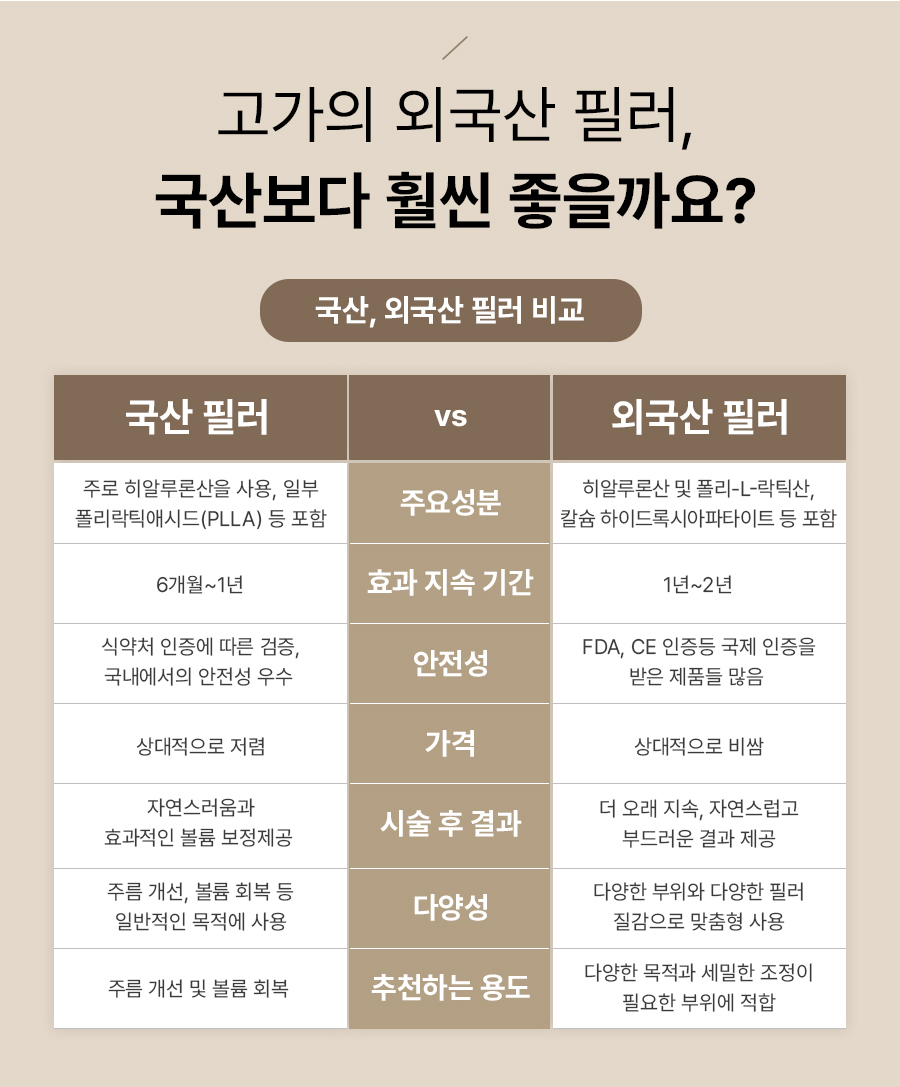
Ask about the range of lifting devices and other treatments available. A clinic that offers multiple devices, such as InMode, Shurink Universe, Tencera, and Ten Triple, along with filler and botulinum toxin, can design a combined plan that fits your skin condition rather than pushing a single treatment for everyone.

Pay attention to the doctor’s attitude toward volume. A trustworthy clinic will be willing to say no to overfilling and will explain why a more conservative approach may look better and safer in the long term. They should clearly describe the type of filler, expected duration, possible side effects, and realistic outcomes.
For international patients staying in or near Yeokchon-dong, practical factors also matter. Evening hours and weekend availability make it easier to fit consultation, treatment, and follow-up into a tight travel schedule. A local clinic that is easy to reach from your accommodation and that has experience with both medical and aesthetic cases can simplify your visit.
Other related aesthetic options
In addition to filler and lifting devices, many clinics in Yeokchon-dong and Eunpyeong-gu provide complementary treatments such as botulinum toxin injections for dynamic wrinkles, thread lifting for mechanical support, contour injections, and various laser or toning treatments for pigmentation and texture.
These options can be combined with filler and ultrasound-type lifting, but they should not be chosen simply because they are popular. A proper diagnosis of your skin condition, muscle activity, and volume loss pattern is essential. Sometimes a simple combination of lifting device and carefully placed filler is enough, while in other cases, small amounts of botulinum toxin or skin-quality treatments may be added.
A clinic that also offers IV drips may suggest them as a general wellness option for fatigue, but such treatments should be seen as supportive rather than as a direct solution for lifting or contouring.
Practical visit information for Yeokchon-dong patients
If you are staying in Yeokchon-dong or elsewhere in Eunpyeong-gu and are considering a combination of Ultherapy-style lifting and filler, you may find it convenient to visit a nearby single-doctor clinic such as Malgeunsu Clinic, where Dr. Lee Hyo-su oversees both consultation and procedures. This one-stop approach can let a physician who treats skin conditions also manage aesthetic planning and follow-up care.
Note: Malgeunsu Clinic does not have an official website; Naver Place appears to be the clinic's primary online listing. The clinic's posted hours are: weekdays 11:00–20:00 (lunch break 14:00–15:00), Saturdays, Sundays, and public holidays 11:00–17:00, closed on Wednesdays and Thursdays. To avoid a wasted trip, confirm hours and availability via Naver Place or by phone before visiting.
Typical opening hours are designed to suit working people and visitors. Weekdays are usually from 11:00 to 20:00, with a lunch break from 14:00 to 15:00. On Saturdays, Sundays, and public holidays, the clinic is generally open from 11:00 to 17:00 without a lunch break. The clinic is closed on Wednesdays and Thursdays.
Because schedules can change, especially around holidays, it is wise to confirm the latest opening hours by phone or through the local map or listing platform before you visit. For international patients, you can also use this contact to ask about language support, recommended timing within your travel dates, and any documents you should bring.
Online consultation and pre-visit preparation
Before traveling to Korea, many overseas patients prefer to have an online consultation or at least a basic discussion by message or email. This can help you understand whether you are a suitable candidate for filler and lifting, and what kind of plan might be realistic.
To make this process smoother, prepare clear photos of your face from the front, 45-degree angles, and both side profiles in good lighting. Note your main concerns in simple points, such as sagging jawline, deep nasolabial folds, or hollow under-eyes. List your medical history, allergies, medications, and any previous procedures, including filler or lifting devices.
During the online consultation, ask specific questions: whether the doctor personally performs filler injections, how they usually combine lifting devices and filler, what kind of downtime you should expect, and how many days after treatment they recommend for follow-up. This helps you plan your Korea visit timeline.
Expected Korea visit timeline for filler and lifting
A typical visit schedule for an international patient might look like this. On day one, you have an in-person consultation and, if both you and the doctor agree, you may receive treatment on the same day. If you prefer more time to think, you can schedule the procedure for the next day.
On the treatment day, plan for one to two hours at the clinic, including consultation review, preparation, and the procedure itself. Mild swelling or redness may appear immediately afterward, so some patients choose to keep the rest of the day relatively quiet.
Over the next few days, swelling and minor bruising, if present, usually improve. If your schedule allows, a follow-up visit within five to seven days can be helpful to check how the filler has settled and to address any questions before you leave Korea. If your stay is shorter, discuss in advance how to manage follow-up remotely.
Aftercare and returning home
After filler and lifting treatments, you can usually resume light daily activities soon, but you should follow your doctor’s specific advice. Avoid pressing or massaging the treated areas unless instructed, and be cautious with very hot environments like saunas or hot yoga for a short period.
If you notice increasing pain, unusual discoloration, or any symptoms that worry you, contact the clinic immediately. For international patients, it is useful to have a direct contact method, such as a phone number or messaging app, before you leave Korea.
As you return home, remember that the full effect of energy-based lifting develops gradually over weeks to months, while filler results are visible immediately but also settle over time. Taking photos at consistent angles can help you and your doctor evaluate changes realistically.

FAQ
What is the difference between Ultherapy-style lifting and filler for sagging cheeks?
Ultrasound or similar lifting devices work by tightening deeper tissues and stimulating collagen, which may give a subtle lifting and firming effect over time. Filler, on the other hand, restores volume and supports specific areas like the midface and cheekbones. For sagging cheeks, lifting alone may tighten the skin but still leave a hollow look, while filler alone may add volume without addressing laxity. Many patients benefit from a combination planned by a doctor who understands both methods.
Is filler safe for international patients visiting Yeokchon-dong for a short time?
Filler can be performed safely for international patients if proper assessment and planning are done. You should allow enough days in your schedule for initial swelling or bruising to settle and, ideally, for one follow-up visit. Sharing your full medical history, previous treatments, and travel dates with the clinic in advance helps the doctor decide whether filler is appropriate and how to time the procedure.
How long do filler results usually last when combined with lifting devices?
The duration of filler results depends on the type of filler, the area treated, your metabolism, and lifestyle factors. Hyaluronic acid fillers commonly used for facial contouring may last several months to over a year, gradually decreasing over time. When combined with lifting devices, the tightening effect of the device and the volumizing effect of the filler work in parallel, but neither is permanent. Your doctor can give a more specific estimate based on the product and area.
What should I ask the clinic before booking filler and lifting in Yeokchon-dong?

Before booking, ask whether the same doctor will handle consultation and injection, what lifting devices are available, and how they usually combine them with filler. Check what kind of filler products are used, what side effects you should be aware of, and how they handle complications if they occur. For travel planning, ask about recommended timing within your stay, opening hours, and how to reach the clinic from your accommodation.
If you are considering a visit to Yeokchon-dong or Eunpyeong-gu for Ultherapy-style lifting and filler, an online consultation with a local, single-doctor clinic can be a good first step. By discussing your goals, medical history, and travel schedule in advance, you can arrive in Korea with a clear, realistic plan for safe and natural-looking treatment.
- 공유 링크 만들기
- X
- 이메일
- 기타 앱


댓글
댓글 쓰기