Daejo-dong Botox Effects and What Overseas Patients Can Expect
- 공유 링크 만들기
- X
- 이메일
- 기타 앱
Direct answer: what Botox in Daejo-dong can realistically do
for wrinkle reduction to longer for jawline contouring; however, individual responses vary, so confirm expected timing and duration with your treating clinician. Results are usually subtle and natural when conservative doses are used, and treatment is quick enough to fit into a short visit to Korea.
This guide explains how Botox works, which areas can be treated, what timeline to expect, possible side effects, and how to plan a practical visit to a local clinic in Daejo-dong.
What people in Daejo-dong really want to know about Botox effects
Around Daejo-dong, office workers and residents often express concern about appearing stiff or obviously treated. Most seek a refreshed, natural look—less tired or less stern—rather than a dramatically different appearance.
Some clinics in the area emphasize conservative dosing and a medical approach to aesthetics. In certain practices, the same physician who treats general skin or health concerns may also perform Botox injections, which some first‑time or overseas patients find reassuring compared with a purely cosmetic setting. Confirm the clinic's staff, credentials, and treatment philosophy directly when making an appointment.
In the sections below, you will find:
- A simple explanation of how Botox works
- The main treatment areas and typical effects
- When you will see changes and how long they usually last
- What can influence a natural versus frozen look
- Safety, side effects, and realistic expectations
- How to prepare for treatment during a visit to Korea
How Botox works and what kinds of effects to expect
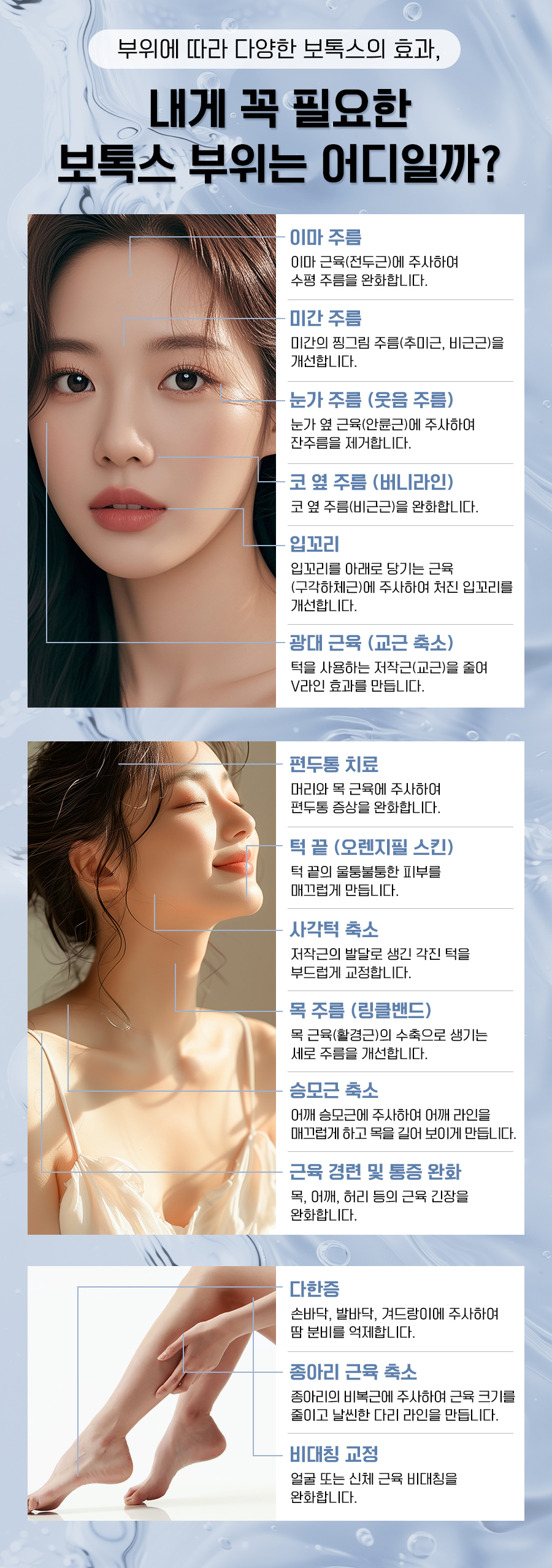
Botox is a neuromodulator. It works by temporarily blocking nerve signals to specific muscles. When the muscle cannot contract as strongly, the overlying skin creases less, and dynamic wrinkles become softer.
Dynamic wrinkles are lines that appear mainly when you move your face, such as when you frown, raise your eyebrows, or smile. Static wrinkles are lines that remain even when your face is relaxed. Botox is most effective for dynamic wrinkles and can sometimes soften static lines, but it does not erase very deep, long-standing creases on its own.
Common treatment areas and typical effects
Glabella frown lines between the eyebrows
Relaxing this area can reduce the angry or stressed expression that some people have even when they feel fine. The effect is a calmer, more approachable look.
Forehead horizontal lines
Botox can smooth the forehead so that lines are less visible when you raise your eyebrows. However, if the dose is too strong, the forehead can look too flat or heavy. Many doctors in Daejo-dong prefer a balanced approach that keeps some natural movement.
Crow’s feet around the eyes
Fine lines at the outer corners of the eyes when you smile can be softened. The aim is usually to keep a natural smile while reducing the sharpness of the wrinkles.
Jawline — masseter muscles
Injecting Botox into the chewing (masseter) muscles can gradually soften a square lower face and create a gentler contour over several weeks.
Nose bunny lines, chin dimpling, and gummy smile
Small doses can smooth scrunching lines on the nose, reduce an orange-peel texture on the chin, or slightly lower an overly high upper lip when smiling. These are subtle refinements rather than dramatic changes.
What Botox does not do
Botox does not lift sagging skin or tighten loose tissue. It cannot replace lifting devices or surgery. It can complement other treatments, such as energy-based lifting devices or skin boosters, but by itself it is mainly a movement-control and wrinkle-softening tool.
Timeline: when Botox effects start and how long they last
If you are planning a trip to Korea, timing is important. Botox does not show its full effect immediately after injection.

Onset of effect
Some patients notice mild changes a few days after treatment, with effects developing further over the following one to two weeks. Many people observe reduced strength of frowning and less pronounced lines, but individual timing and degree of change vary—check with your clinician for what to expect in your case.
Peak effect
The full effect is usually seen around one to two weeks after injection, with peak control of muscle movement often between two and four weeks. For this reason, it is ideal to have your Botox done at least one to two weeks before important events or photo sessions.
Duration of effect
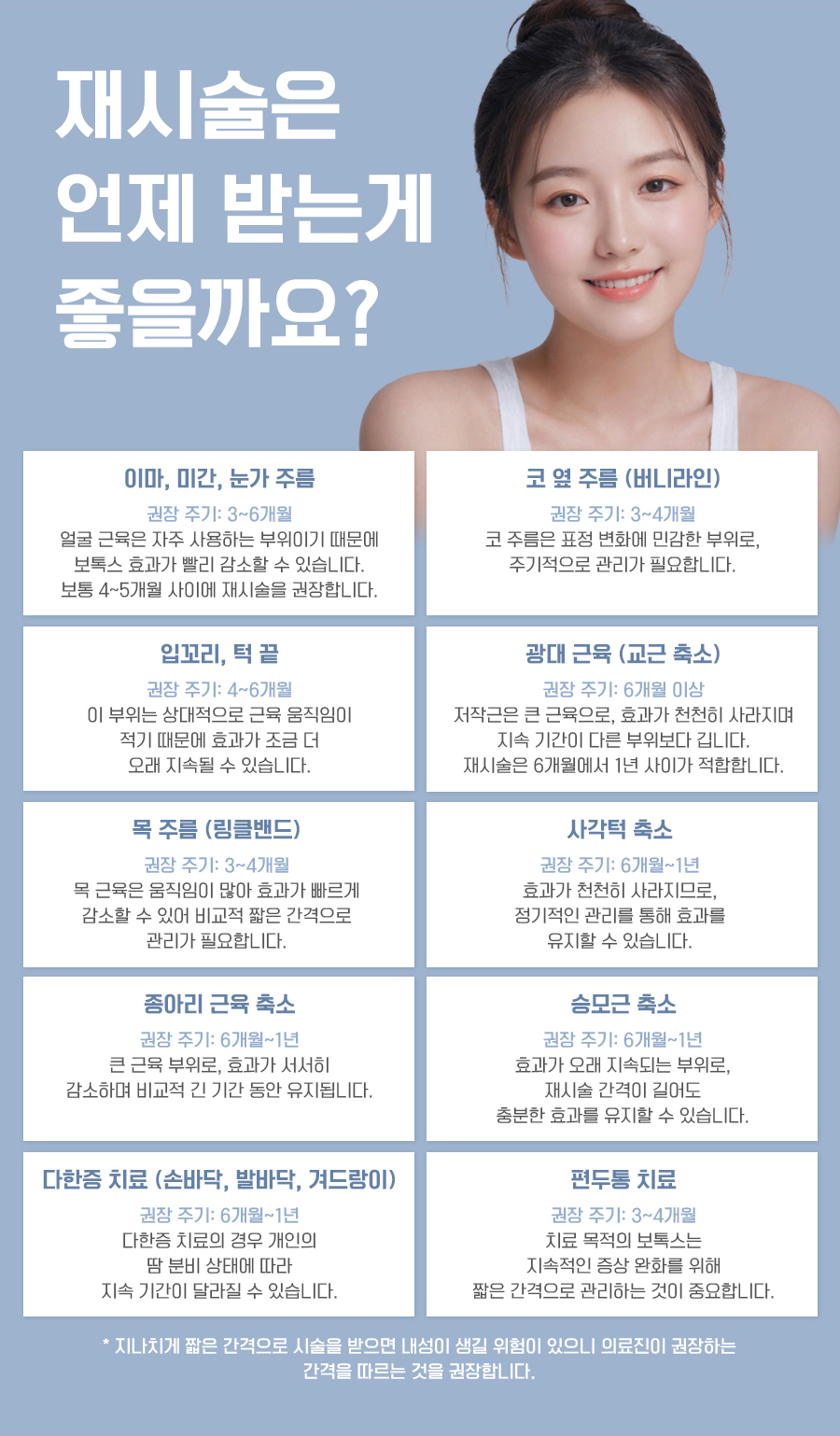
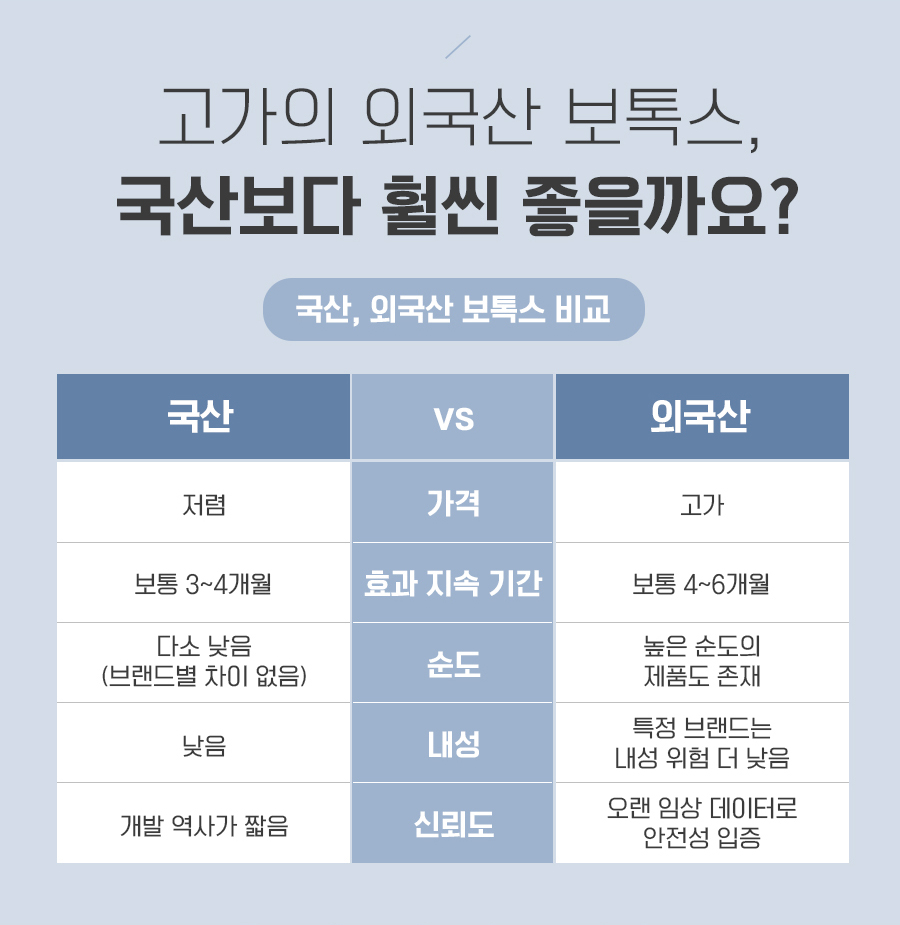
For facial expression lines such as frown lines, forehead lines, and crow’s feet, the typical duration is about three to four months. Some people may feel it wears off a bit earlier or later, depending on their muscle strength, metabolism, and dose.
For jawline masseter contouring, the visible slimming effect often lasts four to six months or more. Because the muscle gradually becomes less bulky with repeated treatments, the interval between sessions can sometimes be extended over time.
First-time users often feel that the effect fades faster. With regular, appropriately spaced treatments, the muscle can become conditioned, and the results may feel more stable.
Natural versus frozen: how dose and technique change the result
The final look from Botox is strongly influenced by dose, injection technique, and how your own muscles behave.
Effect of dose
Higher doses can create a very smooth surface with almost no movement, which some people like but others find too artificial. Conservative dosing allows more natural expression while still softening the lines.
In Daejo-dong, many everyday office workers prefer a moderate approach. They want to look fresher but still be able to speak, present, and smile without feeling like their face is not moving.
Tailoring to job and lifestyle
People who frequently present, teach, or work in customer-facing roles often prefer to keep some forehead and eye movement. The doctor can adjust the number of units and the exact injection points to respect these needs.

For example, a person who relies heavily on eyebrow movement to express emotion might receive a lighter forehead dose, focusing more on the central lines rather than completely freezing the area.
Importance of precise technique
Accurate injection depth and placement help reduce the risk of side effects such as droopy eyelids, uneven brows, or an asymmetric smile. A careful doctor will observe how your muscles move when you talk, frown, or smile, and will mark or mentally map where to inject.
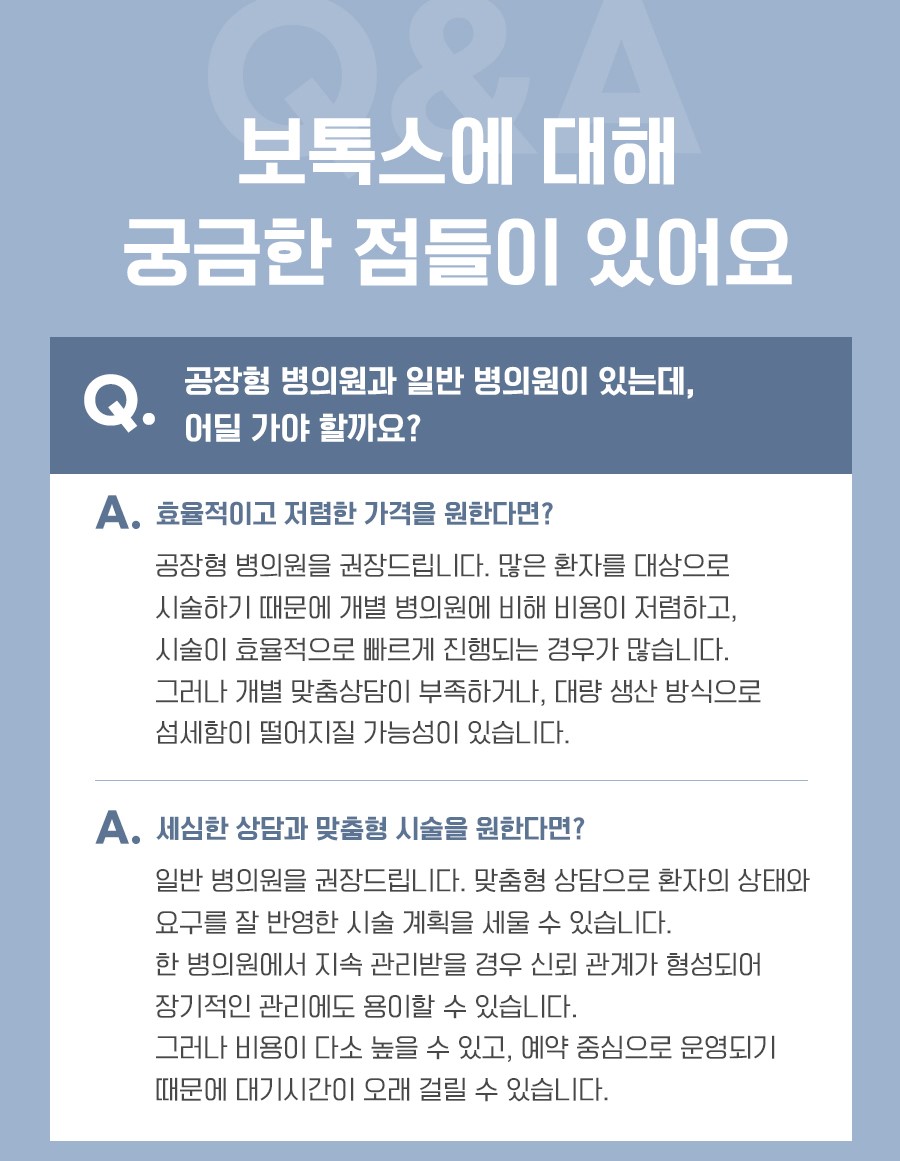
In some large cosmetic chains, the person who consults you and the person who injects you may be different. In contrast, at a smaller neighborhood clinic where a single doctor handles both consultation and injection, your muscle pattern is evaluated and treated by the same person from start to finish. Many first-time patients find this continuity reassuring.
Clinic context in Daejo-dong: medical and aesthetic care together
At such a clinic, the same physician who treats medical skin issues like warts, burns, or inflammatory conditions may also perform aesthetic procedures. This medical perspective can be especially helpful for patients with sensitive skin, chronic conditions, or complex medication histories.
A typical service lineup may include:
- Acne and scar care using medications, peels, and devices
- Energy-based lifting treatments
- Various injectables and skin boosters for hydration and texture
- Botox for wrinkles and facial contouring
- Confirm device availability and specific treatment options with the clinic before booking.
Some clinics also run a dedicated foot center for problems like fungal infections or ingrown toenails. This highlights their role as a comprehensive neighborhood practice rather than a purely cosmetic shop.
Treatment is often provided by a single director-level physician from consultation through procedure. For overseas patients, this can simplify communication and follow-up, since you know exactly who is responsible for your care.
Safety, side effects, and realistic expectations
Botox has been widely used for many years, but it is still a medical procedure and should be approached with realistic expectations.
Common short-term side effects
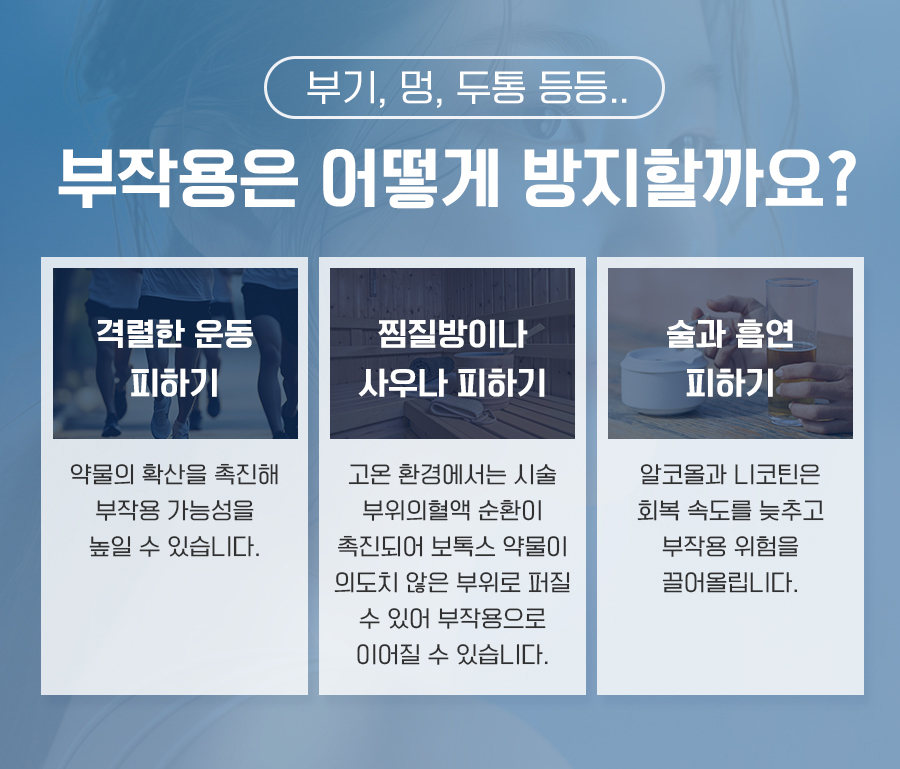
Mild redness or small bumps at injection sites, which usually settle within a few hours
Slight bruising in some spots, especially around the eyes, which may take a few days to fade
A feeling of tightness or heaviness as the muscles relax, often improving as you get used to the new movement pattern
Less common but important risks
Asymmetry between the left and right sides
Drooping of the eyelid or eyebrow if the product spreads or is placed too low
Changes in smile or mouth movement if injections near the lower face are not precisely placed
These risks are usually reduced when the doctor carefully assesses your anatomy, uses conservative doses, and avoids aggressive injection patterns in sensitive areas.
If you dislike the effect, it is important to remember that Botox is not permanent. The product gradually wears off over several months, and your movement returns.
Realistic expectations
Botox softens lines and reduces excessive movement. It does not completely erase all wrinkles, especially deep static lines that have been etched into the skin over many years.
It also does not tighten sagging skin or replace volume that has been lost with age. For those concerns, your doctor may recommend combining Botox with other treatments such as lifting devices or fillers, depending on your situation.
Before treatment, you should share your medical history, medications, allergies, and any previous experiences with Botox or other injectables. This helps the doctor adjust the plan for your safety.
Who might consider Botox in Daejo-dong
Several types of patients commonly consider Botox when visiting or living in Daejo-dong.
Office workers
People who feel they look tired, stressed, or angry in meetings or video calls often benefit from softening frown lines and crow’s feet. The goal is a more rested, approachable expression without obvious signs of treatment.
Late 20s to 30s preventive users
Some younger adults choose small doses of Botox to prevent dynamic lines from becoming deep static wrinkles. This is sometimes called preventive Botox. The doses are usually lighter, focusing on areas such as the glabella and forehead.
People with strong frown or forehead lines
Individuals who naturally frown or raise their eyebrows a lot may develop lines earlier. Botox can reduce the intensity of these movements, helping the skin rest and appear smoother.
Jawline and clenching concerns
Patients with a wide lower face due to strong masseter muscles or those who clench their jaw may consider masseter Botox. Some notice both cosmetic and comfort benefits, although response varies.
Online consultation and pre-visit preparation for overseas patients
If you are traveling from overseas, it is wise to arrange an online or remote consultation before your trip, when possible.
Information to prepare
Clear photos of your face from the front and both sides, relaxed and with expressions such as frowning, raising eyebrows, and smiling
A list of your current medications and supplements
Any history of neuromuscular conditions, allergies, or previous reactions to injectables
Dates and doses of any prior Botox treatments, if known
Questions to ask the clinic
- Which areas are most suitable for Botox in my case?
- What kind of result do you aim for: very smooth or more natural movement?
- How many units do you typically use for someone with my muscle strength?
- What is the expected downtime and what should I avoid after treatment?
By clarifying these points in advance, you can plan your schedule in Korea more easily and avoid misunderstandings about the expected effect.
Expected Korea visit timeline for Botox in Daejo-dong
Because Botox is a quick procedure with minimal downtime, it fits well into a short visit. A typical schedule might look like this:
Day 1 or 2: Consultation and treatment
Visit the clinic in Daejo-dong for an in-person consultation. The doctor will review your medical history, examine your facial movement, and confirm the treatment plan.
In many cases, the injection can be done on the same day. The procedure itself usually takes only a few minutes, with total clinic time often under one hour.
Days 1 to 3: Immediate recovery
You can usually return to normal daily activities right away. Some people experience mild redness or small bumps for a few hours, and occasional bruising for a few days.
The clinic may advise you to avoid heavy exercise, saunas, or lying face down for a certain period after treatment.
Days 3 to 7: Early effect
You may start to notice that you cannot frown as strongly or that lines are less visible when you move your face. The effect will continue to develop.
Days 7 to 14: Peak effect and optional follow-up
This is when the result is usually most visible. If you are still in Korea, a follow-up visit around two weeks can be helpful to check symmetry and discuss whether any minor adjustment is needed.
If you are leaving earlier, you can instead share photos with the clinic online to document your result.
Aftercare and lifestyle tips
After Botox, most aftercare is simple, but a few details can help you get the best from your treatment.
Immediately after treatment
Avoid rubbing or massaging the treated areas for the time recommended by your doctor.
Try not to lie flat or face down for several hours, depending on the clinic’s advice.
Skip saunas, hot baths, and intense exercise on the same day, and follow any specific instructions given.
Short-term care
If you have bruising, you may use gentle cooling packs as instructed. Concealer can usually be used once the skin is no longer sensitive.
Pay attention to any unusual symptoms such as significant drooping or severe pain, and contact the clinic if you are concerned.
Longer-term care
Maintain a consistent skincare routine with sun protection to support overall skin quality.
If you plan to repeat Botox, discuss an appropriate interval with your doctor. Many people return every three to six months, depending on the area and personal preference.
Local convenience for busy Daejo-dong residents and visitors
For people staying in or near Daejo-dong, access and opening hours can be a major advantage.
Some clinics in this area offer evening hours on weekdays, often until 20:00, which is convenient for office workers who want treatment after work.
Many are also open on Saturdays, Sundays, and public holidays during the day. This is helpful for both local residents and overseas visitors who have limited weekday availability.
However, schedules can vary. Some clinics close on specific weekdays, such as Wednesdays and Thursdays, so it is important to check the current timetable before visiting to avoid unnecessary trips.
In addition, not every clinic maintains a full website. Some rely mainly on local platform listings for online information. For the latest details about available procedures, waiting times, and pricing, it is best to call directly or check the most recent listing.
Frequently asked questions about Botox effects in Daejo-dong
How long do Botox effects last for forehead and frown lines?
For most people, Botox in the forehead and glabella (frown lines) lasts around three to four months. Some may notice a slightly shorter or longer duration depending on factors such as muscle strength, dose, and metabolism. With regular treatments spaced appropriately, the effect can sometimes feel more stable over time.
When will I start to see the effect after Botox?
You may begin to notice changes three to five days after treatment, with more visible results around one to two weeks. The effect usually peaks between two and four weeks. If you are planning a special event, it is wise to schedule your Botox at least one to two weeks in advance.
Can I get natural-looking Botox that does not look obvious?
Yes, natural-looking Botox is usually achieved by using conservative doses and carefully choosing where to inject. In Daejo-dong, many clinics focus on softening lines while preserving some facial movement, especially for office workers and people who speak or present frequently. Communicate clearly with your doctor about how much movement you want to keep.
How often should I repeat Botox for maintenance?
Many patients repeat Botox every three to six months, depending on the area treated and how quickly their movement returns. For jawline masseter treatments, intervals may sometimes be longer once the muscle has reduced in size. Your doctor can suggest a schedule based on how your muscles respond.

Is it safe to get Botox at a neighborhood internal medicine and skin clinic?
Botox is a medical procedure, and safety depends on the doctor’s training, experience, and assessment of your health. A neighborhood clinic that manages both medical and aesthetic issues can be a good option, especially if the same physician handles your consultation and injections. You should always share your medical history and ask about the clinic’s approach to dosing, side effects, and follow-up.
In many cases, Botox can be combined with lifting devices to address different aspects of aging. Botox mainly reduces muscle movement and softens wrinkles, while lifting devices target skin tightening and contour. The timing and sequence should be planned by your doctor to match your skin condition and travel schedule.
Soft call to action for online consultation
If you are considering Botox during a visit to Daejo-dong and want a natural, everyday look, an online consultation before your trip can be very helpful. By sharing photos, your medical background, and your goals, you and the clinic can design a realistic plan that fits your travel dates and work or event schedule.
Use your consultation to ask detailed questions about expected effects, timing, and aftercare. With clear communication and a conservative, medically grounded approach, Botox can be a practical way to refresh your appearance during a short stay in Korea.
- 공유 링크 만들기
- X
- 이메일
- 기타 앱


댓글
댓글 쓰기